Artificial Intelligence’s ability to augment and support progress and development over the past few decades is inarguable. However, when does it become damaging, contradictory even? In our latest Beyond Data podcast AI’s Climate Jekyll & Hyde – friend and foe, Tessa Jones (our VP of Data Science, Research & Development) and Sophie Chase-Borthwick (our Data Ethics & Governance Lead) discuss exactly this with Joe Baguley, Vice President and Chief Technology Officer, EMEA, VMware.
That’s a good question if you’ve been curious about what it is and if it applies to you. For example, do you have a cloud product that the US Government would gain benefit from using? Are you being asked to seek a security approval or an “ATO” by your customer? We’ll go through the basics of FedRAMP in this article to help you understand where you stand in that process. FedRAMP is a government-wide program.
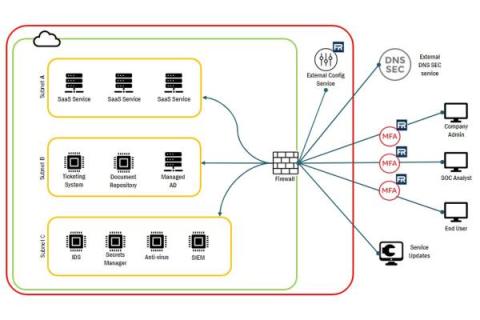
Many organizations have multi-cloud setups, with the average corporation employing services from at least five cloud providers. Compatibility problems, contract breaches, non-secured APIs, and misconfigurations are among the security hazards cloud computing brings, which is popular. SaaS configurations are an attractive target for cybercriminals because they store a large amount of sensitive data, such as payment card details and personal information.
The PCI Council has set a robust framework comprising a comprehensive set of requirements for enhancing the security of payment card data. So, prior to performing the final PCI DSS Audit, most Level 1 Merchants conduct a PCI Readiness Assessment. This is to validate the effectiveness of their security implementation and the readiness for the final audit.
The IT systems and data of the Department of Defense (DoD) and its network of contractors are a matter of national security. Accordingly, the DoD maintains cybersecurity requirements that organizations must meet in order to be an approved vendor for the DoD. This article provides an overview of the most pertinent documents that inform the DoD’s cybersecurity expectations for defense industrial base (DIB) organizations, a review of useful frameworks, and tips for implementing DoD requirements.
Red team assessors are professional hackers who are hired to assess the IT Infrastructure of an organization. They are hired to evaluate and perform hacks on systems in a way a malicious hacker would perform an attack and break in into the systems. They basically simulate an attack to exploit gaps in the organization’s IT Infrastructure. This is precisely the way how a red team assessor evaluates the effectiveness of an organization’s security controls in place.
Financial institutions use sanctions screening as a tool to detect, prevent and manage sanctions imposed on individuals and entities. Sanctions are issued on entities, organizations and individuals who are deemed drug dealers, human traffickers, terrorists and smugglers by the respective country or the U.N.
Wireless network technology is widely used but at the same time, it has many security weaknesses. Several reports have explained weaknesses in the Wired Equivalent Privacy (WEP) & Wi-Fi Protected Setup (WPS) to encrypt wireless data. Before understanding the benefits of Wireless Network Assessment it is necessary to know what it is, why it is needed, how the service works and what you get from the service.