Security | Threat Detection | Cyberattacks | DevSecOps | Compliance

Why MCP Breaks the Financial Services Security Stack

A relationship manager asks the firm's AI assistant to "summarize my top wealth clients by AUM and flag anyone with a pending transfer over $500K." The agent calls a CRM MCP server, then a core banking MCP server, then a market data MCP server, and returns a clean answer in twelve seconds. Names, balances, account numbers, pending wire details, all rendered in plain text inside the chat window. No file moved. No email left the network. No DLP channel triggered.


Securing Success: Protecting IP While Powering Productivity

To ensure a company can continue to operate and make a profit, its intellectual property must be kept safe. It’s not uncommon, however, for employees to unintentionally put IP in harm’s way – and it’s the job of security to prevent accidental disclosure or loss with the right support. Renasas’ focus on preventing accidental data leaks and protecting IP aligns with Netskope's core data loss prevention (DLP) and security capabilities.

Higher Education Spotlight: Sensitive Data Governance in Decentralized Environments

Higher education faces a unique challenge when it comes to managing sensitive data governance. Unlike a more centralized corporate environment, colleges and universities often operate across many semi-independent schools, departments, research groups, and administrative teams. Each may have its own systems, priorities, workflows, and level of security maturity. That structure is part of what makes higher education work. It supports research, academic flexibility, and departmental independence.

Protegrity + Presidio: Secure Sensitive Data in AI Workflows

See how Protegrity and Presidio help developers secure sensitive data in AI workflows. This demo shows how Protegrity AI Developer Edition helps teams discover, protect, mask, and redact sensitive data before it reaches AI models, applications, or analytics pipelines. You’ll learn how developers can.

DLP for GenAI: How to Prevent Sensitive Data Leaks in AI Tools

Employees are feeding sensitive data into AI tools at a pace most security teams did not anticipate. Source code goes into coding assistants. Customer records get pasted into ChatGPT to draft emails. Confidential contracts land in Gemini for summarization. According to Cyberhaven Labs research, 39.7% of the data employees share with AI tools is sensitive, and the volume is accelerating as AI adoption spreads from individual contributors to entire workflows.

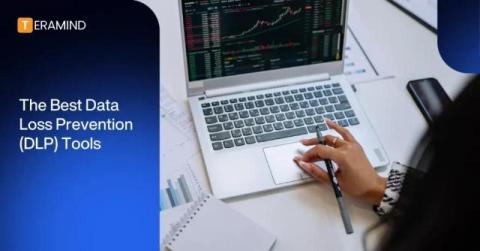
The Best Data Loss Prevention Tools for 2026

The best data loss prevention (DLP) tools in 2026 are those that move beyond rigid, rule-based systems to incorporate AI-driven behavioral analytics. Leading solutions like Teramind (best for AI agent governance), Microsoft Purview (best for M365 ecosystems), and Zscaler (best for cloud-native protection) provide the real-time visibility needed to stop data breaches before they occur.

CISA's GitHub Leak Is a Preview of the MCP Security Problem Every CISO Is About to Inherit

America's cybersecurity agency left its production credentials sitting in a public GitHub repo for six months. The same failure pattern is now being automated by AI agents in every enterprise running Cursor, Claude Desktop, or Copilot.

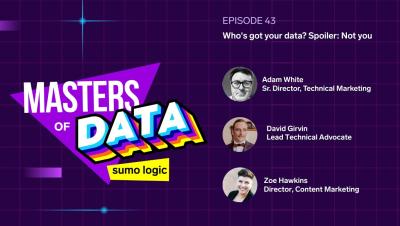
Ep 43: Who's got your data? Spoiler: Not you

In this episode of Masters of Data, we untangle the often-confused cousins of data sovereignty and data residency, because where your data lives and who actually controls it are two very different conversations. We dig into the real-world headaches facing multinational companies, from incident response teams locked out of sovereign data zones to the bureaucratic gymnastics that ensue when compliance meets practicality.

What Is MCP Security? 9 Things Every CISO Needs to Know

Your AI agents had a productive day. Nobody can tell you what data they touched. A developer opens Cursor and connects it to a GitHub MCP server and a Postgres MCP server. The agent reads the repo to understand a schema change, finds an AWS access key in a config file, and uses it to run a migration against staging. The key now lives in the agent's context, in the Postgres query log, in the chat history, and in whatever artifact the developer copies out. No alert fired. No policy triggered.

How to Protect Sensitive Data in Cloud Storage Systems

Cloud storage is now a normal part of daily work for both people and companies. It helps teams work together on shared files and makes backups simple. Services like Microsoft OneDrive, iCloud, and Google Drive are easy to use and widely available. But that ease can also create risk: sensitive data still needs strong protection. Protecting it in cloud storage takes several layers, including solid technical controls, clear company rules, and ongoing attention to new risks.

DSPM Buyer's Guide: 7 Criteria for Evaluating DSPM Tools

Most data security posture management (DSPM) evaluations start with a deceptively simple question: where does our sensitive data live? There are many tools that answer that question. However, the number of tools that go further by tracking how data moves, enforcing controls when data leaves controlled environments, and closing the gap between visibility and action are far more limited.

Office 365 DLP: Securing Your Data with Data Loss Prevention

Data breaches happen every day, so companies need to prioritize data security to protect sensitive data and ensure compliance. Data Loss Prevention (DLP) in Office 365 is a powerful tool that finds, monitors, and protects sensitive data across Microsoft 365 services. This helps improve the security posture of an organization. Office 365 DLP helps businesses keep sensitive data from being shared or exposed without permission.

Why Context-Based Sharing is Critical for Mission Partner Environments

“If you want to go fast, go alone. If you want to go far, go together.” The adage for teamwork has applied to most modern military operations of the past two decades. The challenge in going together lies in the sensitivity of the information and, at the individual level, determining whose clearance and ‘need to know’ align with yours.

Are Streaming Services Putting Your Data at Risk?

There's a version of this conversation that sounds alarmist, and that's not what this is. The unfortunate thing is that most people don't think about this until something goes wrong. A suspicious charge on a card, a login alert from a device they don't recognize, an email that knows a little too much. By the point that question isn't hypothetical anymore. But it's worth thinking about before that happens, because the answer is more complicated than a simple yes or no.

Surface Tension in AI: Early Adopters Pivoting for Compliance

A good way to measure the success and challenges of new technologies is to spend an evening networking with your peers. Sure, a lot of what you take in is anecdotal, but what you are looking for is consistency in the stories being shared and the industries where the stories are occurring. Recently, I had the opportunity to network with a number of my peers. I had one question that I asked consistently: “How are your AI deployments going?”

Falcon Data Security: Stop Data Loss, Not Productivity - End-User Justification & Forensics Capture

End the rigid, binary choice of traditional DLP. Falcon Data Security changes the game by using End-User Justification (EUJ) to educate employees at the point of risk, empowering them to make smart security decisions and keeping legitimate business transfers moving. For full context and compliance, Forensic Capture gives your security team the complete story with encrypted file retrieval and screen recordings of user activity before and after the event. Watch the demo to see how to maintain security without slowing down your team.

How to Monitor MCP Usage: A 10-Step Security Checklist for 2026

What you need to know: MCP can evade traditional DLP, IAM, and SIEM controls because agent traffic looks like authorized API calls, sensitive data is semantically transformed before it leaves the perimeter, and exfiltration happens through tool invocations rather than file transfers.

Standalone Browser Extension: Data Security Without the Endpoint Agent

Most enterprise data security tools are built for a world where IT owns and manages every device. That world no longer exists. Contractors work from personal laptops. Entire teams run ChromeOS. Frontline workers access corporate systems through shared or unmanaged devices. And every one of those browser sessions can involve uploads, downloads, copy-paste, and form inputs touching sensitive data.

DLP Buyer's Guide: 8 Criteria for Evaluating Data Loss Prevention Solutions

Every DLP evaluation starts with the same frustration: The tools that dominated the market a decade ago were built for a threat landscape that no longer exists. Sensitive data now moves across SaaS platforms, AI tools, encrypted messaging apps, and personal cloud accounts, often in ways no file-level policy can follow. If you are evaluating DLP for the first time or replacing a tool that has underdelivered, this guide gives you the framework to ask the right questions and recognize the right answers.

Data Sovereignty vs. Data Residency: Key Differences Explained

Storing data in a specific country doesn’t automatically mean that that country’s laws are the only ones that apply. This disconnect catches a lot of organizations off guard, and it’s exactly where the confusion between data sovereignty vs. data residency begins. One is about where your data physically lives. The other is about which laws govern it, regardless of location.

Why Endpoints are Still a Data Security Problem in the Age of AI

After decades of innovation in personal technology, ranging from watches that track personal fitness, mini super-computers that we call phones, and a whole host of other gadgets and self-help technologies, our companies still rely on one technology that started over 45 years ago – the laptop. Fun fact: the first one, called the Osborne 1, weighed 24 pounds! The modern laptop has a better screen, longer battery life, and weighs significantly less, but at its core is still a hard drive.

The Three Pillars of Durable Data Security: Presence, Lineage, and AI

Every security vendor now claims artificial intelligence (AI) capabilities. Foundation models are becoming increasingly interchangeable, and the gap between what vendors promise and what programs actually deliver is widening. The question worth asking is not which vendor has the best model. It is: what is the model running on? The answer to that question determines whether a data security program hardens over time or requires constant manual maintenance.

How DSPM Improves Compliance for Enterprises

Regulatory compliance is one of the most operationally expensive obligations security and legal teams carry. GDPR, HIPAA, CCPA, PCI DSS, and CMMC all require organizations to demonstrate, on demand, that they know where regulated data lives, who can access it, and how it is protected. Most enterprises struggle to meet that standard because they are trying to answer a continuous question with a periodic process.

Data Leak iPhone: Causes, Risks, and How to Protect Your Data

In 2023, the FBI's Internet Crime Complaint Center recorded over 880,000 complaints, with billions lost. Many began with small actions on a phone. A data leak on iPhone often stems from user behavior like missed updates, weak passwords, or phishing links, rather than the device itself.

8 DSPM Use Cases Every CISO Should Know

Data Security Posture Management has moved from an emerging concept to an operational priority for security leaders. Understanding the most impactful DSPM use cases helps CISOs protect sensitive data across cloud environments, enforce governance policies, and stay ahead of compliance mandates. This guide breaks down eight critical applications every security leader should evaluate.