Security | Threat Detection | Cyberattacks | DevSecOps | Compliance

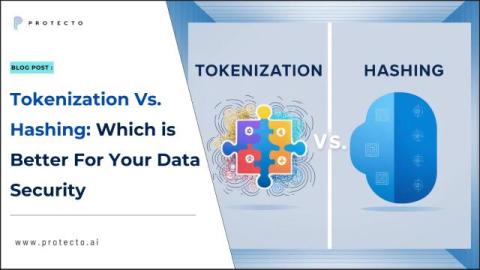
Tokenization Vs Hashing: Which is Better for Your Data Security

Data security is a critical concern for organizations worldwide. Cyberattacks and data breaches have put sensitive information such as customer data, payment details, and user credentials at constant risk. Techniques like tokenization vs hashing provide essential tools to safeguard this information effectively. Understanding the distinctions between these methods is crucial for selecting the right approach.
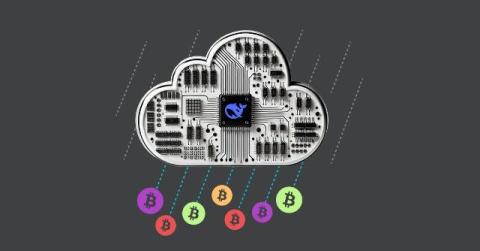
LLMjacking targets DeepSeek

Since the Sysdig Threat Research Team (TRT) discovered LLMjacking in May 2024, we have continued to observe new insights into and applications for these attacks. Large language models (LLMs) are rapidly evolving and we are all still learning how best to use them, but in the same vein, attackers continue to evolve and grow their use cases for misuse.

Using Exposed Ollama APIs to Find DeepSeek Models

The explosion of AI has led to the creation of tools that make it more accessible, leading to more adoption and more numerous, less sophisticated users. As with cloud computing, that pattern of growth leads to misconfigurations and, ultimately, leaks. One vector for AI leakage is exposed Ollama APIs that allow access to running AI models. Those exposed APIs create potential information security problems for the models’ owners.

AI Security is API Security: What CISOs and CIOs Need to Know

Just when CIOs and CISOs thought they were getting a grip on API security, AI came along and shook things up. In the past few years, a huge number of organizations have adopted AI, realizing innumerable productivity, operational, and efficiency benefits. However, they’re also having to deal with unprecedented API security challenges. Wallarm’s Annual 2025 API ThreatStats Report reveals a staggering 1,025% year-on-year increase in AI-related API vulnerabilities.

Don't Fall Victim: DeepSeek-Themed Scams Are on the Rise

Scammers are taking advantage of the newfound popularity of the China-based AI app DeepSeek, according to researchers at ESET. DeepSeek released its generative AI tool last month, and it’s since overtaken ChatGPT as the top free app in Apple’s App Store. Users are now spotting lookalike domains designed to deliver malware or steal information. Other scams offer users the opportunity to buy phony stocks in DeepSeek.

Autonomous Adversaries: Are Blue Teams Ready for Cyberattacks To Go Agentic?

2024 was a year of incredible progression for Artificial Intelligence. As large language models (LLMs) have evolved, they have become invaluable tools for enriching the capabilities of defenders – instantly providing the knowledge, procedures, opinions, visualizations, or code any given situation demands. However, these same models provide outputs that enable even low-sophistication attackers to uplift their own skill-levels.

Introducing the Ivanti ITSM & Protecto Partnership: Enabling Secure Data for AI Agents

Discover how Protecto secures data within Ivanti ITSM APIs to prevent data leaks, privacy violations, and compliance risks. In this video, we’ll show how Protecto acts as a data guardrail, ensuring that sensitive information like PII and PHI is identified, masked, and handled securely before it reaches AI agents. Participants: Amar Kanagaraj, Founder & CEO of Protecto Kalyan Vishnubhotla, Director of Strategic Partnerships, Ivanti.

The Dark Side of AI: How Cybercriminals Exploit Generative AI for Attacks

Artificial Intelligence (AI) has been a game-changer in industries that have further churned into process efficiency and revolutionized cybersecurity. On the flip side, its potential has been weaponized by threat actors. Google's Threat Intelligence Group (GTIG) recently came out with reports which showed that state-sponsored hackers are actively exploiting Google's AI-powered Gemini assistant to strengthen their cyberattacks.

Warning: Organizations Need to Prep For AI-Powered Ransomware Attacks

The rise of agentic AI tools will transform the cybercrime landscape, according to a new report from Malwarebytes. Agentic AI—which is still under development—is a step above the generative AI tools that are currently available to the public, and will likely be widely released in 2025. While these tools will have many legitimate uses, they’ll also enable cybercriminals to scale their attacks.

2025 OWASP Top 10 for LLM Applications: A Quick Guide

Published first as a whitepaper in late 2024, the 2025 OWASP Top 10 for LLM Applications is yet another monumental effort from OWASP made possible by a large number of experts in the fields of AI, cybersecurity, cloud technology, and beyond—including Mend.io Head of AI Bar-El Tayouri. LLMs are still new to the market but beginning to mature, and the OWASP Top 10 for LLM Applications is maturing alongside it.