Traditional AI integrations force you to choose between convenience and control. Our approach gives you both. LimaCharlie's MCP server makes connecting AI agents to your security infrastructure both simple and secure. The Process: Generate API keys with precise permissions One command connects Claude Code to your org Query live security data with natural language Key Features: The result: AI agents that work within your security boundaries while providing instant access to live infrastructure data.
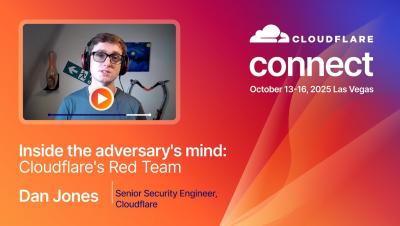
Get a behind-the-scenes look at Cloudflare’s Red Team with Dan Jones — a Senior Security Engineer who thinks like an attacker to strengthen defenses. In this preview of his Cloudflare Connect 2025 talk, Dan shares how offensive security helps protect millions of Internet properties.
API abuse isn’t just a security risk it can hit your bottom line. In this clip, Wallarm and Oracle experts explain how attackers and even legitimate users can trigger costly API calls, drive up cloud bills, or abuse third-party integrations. Learn why monitoring, rate limiting, and cost controls are critical to protecting both your security and your budget.
IT Pros: if you're feeling overwhelmed by the sheer number of IT tools, you're not alone. JumpCloud's new report found IT teams use an average of 9.3 tools for core functions. But this 'tool sprawl' isn't just an annoyance. 74% of IT pros say it adds complexity, and the top challenge? Security gaps, cited by 56%.
The challenge isn’t just that AI agents are new. It’s that they blur traditional boundaries of data control, creating hidden sub-processors and uncontrolled data flows. For CISOs, compliance officers, and security leaders, this presents a fundamental governance problem: if you don’t know which AI services are touching your data, you cannot prove compliance.
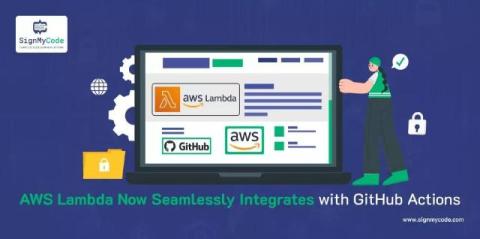
In August 2025, AWS made native support available to deploy AWS Lambda functions straight from GitHub Actions. With this integration, a lot of the complexity developers have had to undergo conventionally with serverless automatic deployment is eliminated. As a valuable practical improvement, teams will now gain the ability to utilize declarative GitHub workflows with OIDC-secured authentication and auto-packaging of code for simpler CI/CD pipelines.
Manual ticketing slows response time and invites errors. Forward Networks simplifies this by detecting drift, anomalies, or changes—and automatically creating ServiceNow incidents based on verified data. Incidents are enriched with hostname, config diff, device roles, and severity, saving time and ensuring accuracy. Implementing change management for network modifications has multiple benefits.
What if a single developer pastes sensitive code into a chatbot and, in seconds, exposes your company’s most valuable secrets? That’s not a thought experiment. Incidents at Samsung, Amazon, and other enterprises show how generative AI can turn everyday work into an unintentional leak.
As Generative AI revolutionizes businesses everywhere, security and IT leaders find themselves in a tough spot. Executives are mandating speedy adoption of Generative AI tools to drive efficiency and stay abreast of competitors. Meanwhile, IT and Security teams must rapidly develop an AI Security Strategy, even before the organization really understands exactly how it plans to adopt and deploy Generative AI.