Security | Threat Detection | Cyberattacks | DevSecOps | Compliance

Bitsight: AI-powered intelligence that outsmarts cyber risk

Bitsight is the global leader in cyber risk intelligence, leveraging advanced AI to empower organizations with precise insights derived from the industry’s most extensive external cybersecurity dataset. With more than 3,500 customers and over 68,000 organizations active on its platform, Bitsight delivers real-time visibility into cyber risk and threat exposure, enabling teams to rapidly identify vulnerabilities, detect emerging threats, prioritize remediation, and mitigate risks across their extended attack surface.

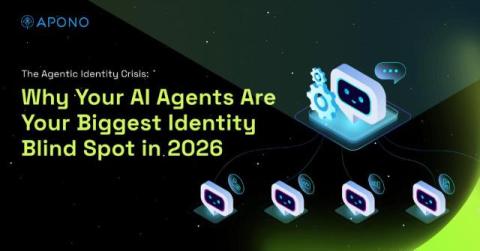
How autonomous AI agents like OpenClaw are reshaping enterprise identity security

The viral surge of OpenClaw (formerly Clawdbot and Moltbot) has captured the tech world’s imagination, amassing over 160,000 GitHub stars and driving a hardware rush for Mac Minis to host these 24/7 assistants.

You can't rely on open source for security - not even when AI is involved

Open source libraries, packages, and models power nearly every product team today. They accelerate development, democratize innovation, and let teams stand on the shoulders of giants. But there’s a dangerous assumption creeping into engineering orgs: that open source — or AI trained on open source — will keep your software safe. That assumption is wrong. Open source gives you speed and community, not guaranteed security.

Falcon Cloud Security: Visibility and Control Over Your Cloud Risks

Falcon Cloud Security Cloud Risk Rules correlate insights across your cloud environment to identify potentially dangerous states and combinations, even when individual findings appear low-severity in isolation amid the countless security risks your cloud infrastructure faces every day.

Privacy in the AI Age: What's Really Changing in 2026 (with Cloudflare's CPO)

In this episode of This Week in NET, host João Tomé is joined by Emily Hancock, Cloudflare’s Chief Privacy Officer and Data Protection Officer, for a wide-ranging conversation about privacy in 2026 and how the role has evolved in the age of AI.

Mobile Payment Security in PCI DSS 4.0.1: In-App Purchase Protection vs Web Checkout

Nearly 70% of online purchases now happen on mobile, yet PCI scoping decisions are still often made as if mobile is just a smaller browser. It is not. A native in-app payment flow and a mobile web checkout trigger materially different obligations under PCI DSS 4.0.1. In one case, risk concentrates inside the application runtime through SDKs, platform storage, and release controls.

Clawing For Scraps: Risks of OpenClaw AKA ClawdBot

The world of AI is still advancing rapidly, but so are the threats. Wherever you get your news, Clawdbot, or is it Moltbot, or is it now called OpenClaw(?) is everywhere lately. You can’t avoid talk of this AI personal assistant. It’s actually now called OpenClaw after some naming drama, and at the time of writing has 166k followers on GitHub. The repository also has an alarming number of forks, issues, and pull requests.

Jupyter Notebook for Protegrity AI Developer Edition

Want to test Protegrity’s data protection features without any local installation? In this tutorial, Dan Johnson shows you how to make your first protect and unprotect API calls directly in your browser using our interactive Jupyter Notebook (Binder). This is the fastest way to see Protegrity’s Python SDK in action—authenticating, applying protection policies, and maintaining data utility in real-time.

LLM Application for Protegrity AI Developer Edition

Securing LLM Workflows with Protegrity AI Developer Edition Learn how to protect sensitive data and prevent malicious prompt injections in your AI applications. In this technical walkthrough, Dan Johnson, Software Engineer at Protegrity, demonstrates a dual-gate security architecture designed to safeguard Large Language Models. Discover how to implement a security gateway that sits between your users and your LLM. This demonstration covers the integration of semantic guardrails and classification APIs to ensure data privacy and system integrity.