Security | Threat Detection | Cyberattacks | DevSecOps | Compliance

Beyond IP addresses: How DDI solutions power telco data center operations

There is a moment, somewhere between the third ring of a phone call connecting and the first frame of a video buffering, where an entire telco data center has already done its job. A device asked a question, Where do I belong, and what is my name here? And somewhere in a rack of servers, in less time than it takes to blink, the system gave the answer.

The MemcycoFM Show: Ep 27 - What Is Agentic Threat Intelligence?

In the recently published blog from Memcyco titled "What Is Agentic Threat Intelligence?", we discussed agentic threat intelligence as an emerging CTI model. Bounded agents support repetitive investigation work, such as collection, enrichment, prioritization, and evidence packaging, while analysts retain control over takedown and escalation decisions. Vendor briefings are full of “agentic AI” right now. Most of them describe the same thing: faster dashboards and smarter alerts. That is not agentic threat intelligence.

Erasing Security Debt with an App Risk Remediation Platform

A risk remediation platform is the operational infrastructure that transforms security debt from an unmanaged backlog into a structured, measurable program. With 82% of organizations now carrying security debt and the average fix half-life sitting at 243 days, the gap between vulnerability discovery and resolution is where breaches happen.

RBAC vs. ACL: Understanding the Differences in Access Control

Every employee, contractor, application, and device in your environment needs the right level of access, but deciding how that access is managed is where many organizations struggle. Grant too many permissions, and you increase security risks. Make access too restrictive, and productivity suffers. Understanding the differences between RBAC and ACL is essential for designing a secure, scalable, and compliant access strategy.

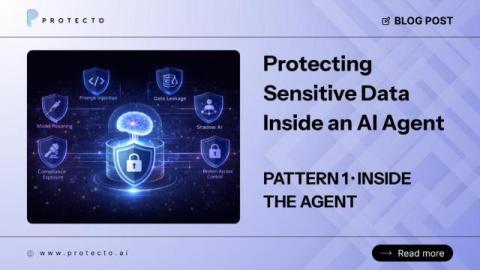
DLP for AI: Protecting Sensitive Data in the Age of AI

Employees paste code into ChatGPT. They drop customer lists into Gemini for a quick summary. They upload a contract to an AI note-taker before a meeting starts. None of it feels risky in the moment. But all of it can walk sensitive data straight out of your organization. AI DLP exists to close that gap.

The practical checklist for defending against supply chain attacks

Supply chain attacks are having a moment. Open-source malware detections jumped 73% in 2025. In the past year, the debug and chalk packages were backdoored, the tj-actions GitHub Action was compromised and pulled malicious code into thousands of pipelines, and the axios maintainer account was hijacked and used to distribute a RAT. Malicious releases also hit Zapier, ENS Domains, PostHog, and Bitwarden CLI. Every one of these attacks was preventable with controls that were available at the time.