Security | Threat Detection | Cyberattacks | DevSecOps | Compliance

5 AI Myths Exposing the Governance Gap

AI adoption isn’t slowing down. It’s accelerating, quietly, unevenly, and often outside formal control. To separate assumption from reality, CultureAI commissioned an independent research study of 300 senior technology, security, and risk leaders across North America and Europe. Respondents included CISOs, CIOs, CTOs, Data Protection Officers, and senior IT and security leaders across finance, healthcare, technology, legal, and professional services.

OCRFix: Botnet Trojan delivered through ClickFix and EtherHiding

During routine analysis, CYJAX identified a typosquatting phishing campaign which impersonated the Optical Character Recognition (OCR) tool Tesseract OCR. What originally appeared to be a ClickFix attack evolved into a sophisticated campaign delivering multi-stage malware deployments. The campaign, which CYJAX has titled OCRFix, made use of heavy obfuscation and defence evasion techniques, including EtherHiding.

Leaked Credentials: The Hidden Supply Chain Powering Modern Ransomware Attacks

Ransomware incidents are often perceived as sudden, destructive events triggered by malicious payloads. In reality, many modern ransomware attacks begin much earlier and in a far less visible way: with compromised credentials and pre-existing access sold in underground markets. Threat intelligence collected from access broker activity and credential exposure sources indicates that ransomware operators increasingly rely on purchased access rather than direct exploitation.

Is pCloud Safe for your private files?

pCloud is a cloud storage service founded in 2013, providing users with cloud storage to upload, sync, access, and share files across devices, including computers and mobile phones. The company offers free and paid plans, including lifetime storage options, file sharing tools, automatic backup features, and optional zero-knowledge encryption through its paid pCloud Crypto service. Throughout this article, we will answer the question: Is PCloud safe, along with covering the following topics.

Write Once, Read Many: How WORM Storage Makes Your Data Secure

WORM (Write Once, Read Many) is a data storage model specifically designed to guarantee data integrity over time. In a WORM-compliant storage, data is written once and cannot be altered or erased for a defined retention period (can be read as often as needed though). Table of contents: hide What is WORM (Write Once Read Many) How WORM works in practice WORM vs immutable storage Why WORM is important against ransomware WORM-compliant storage in GitProtect Why WORM alone is not enough.

GitProtect is now available on Microsoft Marketplace

We’re excited to announce that GitProtect, an enterprise DevOps Backup & Disaster Recovery software, is now officially available on Microsoft Marketplace! This milestone represents more than a new distribution channel. It reinforces our commitment to delivering secure, enterprise-ready DevOps data protection, which is now also accessible through a trusted Microsoft ecosystem.

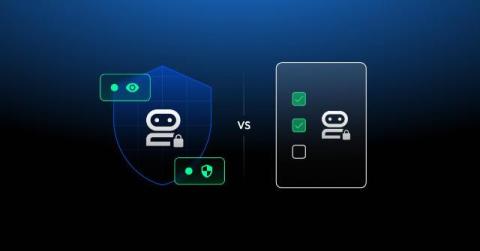
Microsoft Defender vs. MDR: What's Missing?

Microsoft Defender is widely deployed across small and midsize businesses. It is built into the Microsoft ecosystem, familiar to IT teams, and effective at detecting suspicious activity on endpoints. However, detection alone does not stop an attack. As cyber threats evolve, the biggest risk is not missing alerts. It’s failing to investigate and respond to them fast enough. The risk lies in what happens after an alert is generated.

Cato CTRL Threat Research: When OpenClaw, Your AI Personal Assistant, Becomes the Backdoor

Cato CTRL’s Vitaly Simonovich (senior security researcher) has identified a threat actor selling root shell access to a UK-based automation company through a compromised AI personal assistant based on OpenClaw.

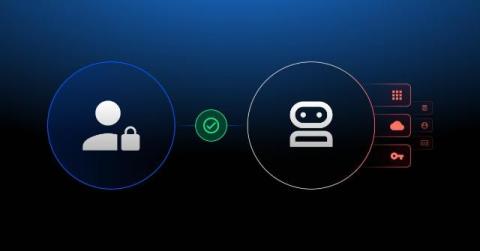
AI Agents: How Your New Employee Brings More Security Risks

AI agents aren’t applications. They’re employees. So why are we treating them like applications? AI agents don’t behave like classic applications. They access systems. They make decisions. They operate continuously. They interact with humans and other systems without being explicitly triggered each time. That’s not automation. That’s not scripts. That’s a digital worker.