Security | Threat Detection | Cyberattacks | DevSecOps | Compliance

AI across the security lifecycle

For nearly a decade, the security industry has used machine learning to solve detection. By feeding it enough logs and determining abnormal behaviors, it found the threats that rules-based systems miss. This delivered sharper anomaly detection, fewer false positives, and UEBA is now essential. In fact, threat detection and analytics account for close to 44% of total SIEM spend, the single largest use case by far. Using machine learning for detection was only the start.

Persona supports France and Germany EUDI Wallets for secure, private identity verification

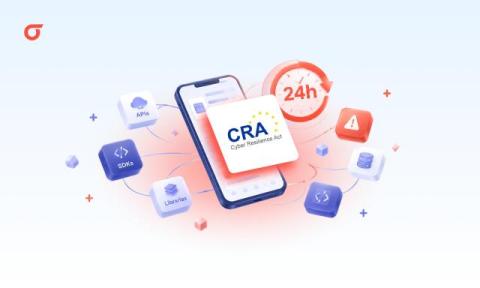
Across Europe, two major regulatory deadlines are arriving that will reshape the mechanics of identity verification for EU-regulated businesses. By the end of 2026, eIDAS 2.0 will require organizations to accept EUDI Wallets for online services where electronic identification or authentication is necessary. That obligation covers state, regional, and local authorities; bodies governed by public law; and certain private entities that are required to provide public services.

Major Security Event: Fortinet VPN Credentials and Configuration Data Exposed for 73,000 Devices

A large-scale credential compromise campaign known as FortiBleed has exposed verified administrator credentials for more than 73,000 internet-facing Fortinet FortiGate firewalls. As of mid-June 2026, the dataset is reportedly circulating within criminal underground communities. Researchers estimate that approximately 50% of all internet-reachable FortiGate devices may be affected across 194 countries, making this one of the most significant Fortinet security incidents to date.

What Canada's Bill C-36 Means for AI-Powered Digital Experiences

As Canada strengthens privacy protections and enforcement, organizations must find a way to accelerate AI innovation while maintaining continuous visibility into how customer data is collected, shared, and protected. Canada’s proposed Bill C-36 is about more than privacy regulation. It reflects a broader challenge facing governments, regulators, and businesses around the world.

AI Export Controls and the Risk of Slowing Down Defense

The Trump administration has ordered Anthropic to restrict access to its most advanced AI models, Fable 5 and Mythos 5, citing national security concerns. Officials raised the possibility that these systems could be used by foreign actors to identify software vulnerabilities or support cyber attacks.

8 data governance tools for mid-market security teams in 2026

Data governance tools fall into two categories that buyers often conflate: catalog platforms for data quality and lineage, and access governance platforms for proving who can access sensitive data and demonstrating control to auditors. Mid-market teams under pressure from GDPR, HIPAA, SOX, or PCI DSS typically need both.

Top SIEM Tools for Hybrid Environments in 2026

Hybrid infrastructure has expanded faster than most Security Information and Event Management (SIEM) tools can keep up with: on-premises AD, cloud workloads, and SaaS each produce telemetry at different quality levels, while identity event normalization and compliance evidence output are the layers that most SIEM deployments address last. The platforms that close those gaps from the initial deployment architecture produce cleaner signals and audit-ready evidence without additional tooling.

Weekly Brief: Driftnet Edition | Why SOC and TPRM Teams Need the Same Intelligence

In this week's Weekly Brief: The Driftnet Edition, Brandon Torio explores why the most mature security organizations are breaking down the walls between Security Operations Center (SOC) and Third-Party Risk Management (TPRM) teams. Historically, these teams have approached risk from different angles. TPRM teams focus on vendor oversight, compliance, and risk workflows. SOC teams focus on attack surfaces, vulnerabilities, threat activity, and internet-facing exposures.

AI Agent Security Explained: Agents, MCP, Prompt Injection, and the AI Harness

AI Agent Security is quickly becoming one of the most important areas in cybersecurity. Terms like "agent," "harness," "MCP," "tool calls," "tool responses," "instruction hijacking," "indirect prompt injection," "prompt exfiltration," and "tool misuse" are appearing in conference talks, vendor announcements, podcasts, and industry discussions, often without clear explanations.

Application Security Already Knows What's Broken. Context Is How You Fix It Faster.

While traditional security tools excel at finding vulnerabilities, the sheer volume of alerts—now accelerated by AI-driven development—has made manual triage impossible. The true value of Application Security Posture Management (ASPM) lies not in providing more visibility or creating a cleaner backlog, but in shifting from cataloging risk to taking fast, context-driven, machine-speed action to actually fix what is broken.