Security | Threat Detection | Cyberattacks | DevSecOps | Compliance

Protecting Government Agencies From Mobile Threats: A Guide

If you work for (or alongside) the United States government, then threat actors want your sensitive data. In 2023, federal agencies fell victim to 11 major cybersecurity incidents, with threats continuing to evolve well into 2024. Safeguarding federal and critical infrastructure organizations requires a modern cybersecurity framework. In today’s mobile-enabled workplaces, that means extending your data protection strategy to wherever devices are being used.

Navigating FedRAMP Compliance: Why It's Crucial for Mobile Security

If your organization handles United States federal government data in cloud environments, it’s often a requirement to use FedRAMP-authorized solutions. The Federal Risk and Authorization Management Program (FedRAMP) provides consistent standards for protecting unclassified data that passes between the federal government and privately owned third parties.

Government Organizations Lose Nearly a Month in Downtime for Every Ransomware Attack

Recent research by Comparitech reveals the shocking truth about ransomware attacks on government entities; they have a longer impact than anyone thought. Tracking over 1100 government-targeted ransomware attacks over a period of six years, researchers discovered that each day of downtime cost entities nearly $83,600, and that in each attack the downtime lasted for an average of 27.8 days.

Enhancing Threat Intelligence and Threat Detection in Australian Central Government Organisations

In an era where digital frontiers are continuously expanding and evolving, adaptability is critical for Federal, State, and Local Government Departments, and Agencies to secure their infrastructure and sensitive data. Progress and growth strategies must be aligned with defense against growing cyber threats. Cyber threat intelligence (CTI) and threat detection have emerged as essential strategies for proactively identifying and mitigating cyber risks.

Whole-of-State Cybersecurity: A Unified Approach to Protecting Government

In today’s era, where the digital landscape is as critical as the physical, the urgency to adapt and reinforce our cybersecurity infrastructure is more pressing than ever. For government operations, where data breaches and cyberattacks frequently make the headlines, adopting a whole-of-state approach to cybersecurity isn’t just a precaution—it’s a strategic imperative to protect our communities and safeguard our future.

Zero trust for public sector organizations

The “never trust, always verify” premise of Zero Trust requires a significant shift in how agencies evaluate security risks. Every transaction demands a risk assessment across every Zero Trust pillar — a tough task when the key data is locked in different systems and tools. But a unified data platform can essentially serve as the glue that connects all your systems, making them more integrated, accurate, and trustable.

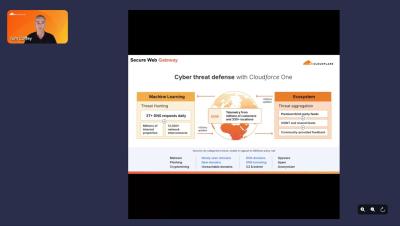
Protecting Public Sector Websites and the critical systems behind them: link to the hosted On-Demand

Your agency’s website is more than just a landing page—it’s where constituents find information, apply for services, and engage with their government. It’s your digital front door. But security doesn’t stop at the homepage. Behind every online form, data portal, and public-facing interface, there’s a complex infrastructure that needs just as much protection.

Federal Desktop Core Configuration (FDCC/USGCB) Compliance

Federal Desktop Core Configuration (FDCC) was mandated by the US Office of Management and Budget (OMB) in 2007 and provides a set of security standards that must be adhered to by all federal workstations and laptops running Windows XP or Vista. FDCC evolved into the United States Government Configuration Baseline (USGCB) starting in 2010, although some agencies and contracts may still be under lingering FDCC compliance obligations.