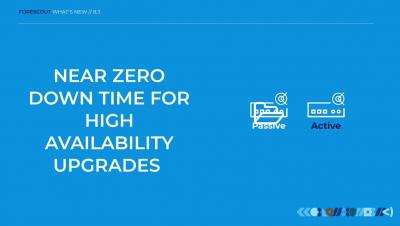
Forescout 8.3: What's New
Watch this quick video to get some highlights of Forescout 8.3.


Low-code application development provides a solution for a wide range of business needs, from business applications through process automation and integrations. Low-code platforms are becoming a key technology behind the ongoing digital transformation trend, and as such, adoption of low-code platforms is soaring. However, low-code is as much a revolution as it is an exciting new technology.
In 2019, when the term Secure Access Service Edge, or SASE, was first coined, it was to define a useful way of setting up the network and security infrastructure to satisfy a cloud-first future with services at the edge. Since then, SASE has been long on hype and discussion, but short on actual, practical advice. What does SASE mean for your digital transformation strategy?
Canopy was advertised to me through my child’s school. The company offers a multi-platform parental control app claiming various abilities to limit and monitor use of protected devices. Access to Canopy is billed monthly and includes a compelling list of features for concerned parents: Several of these features imply that the app has privileged access to the protected device and may be intercepting TLS connections to filter content.
In my previous post, I discussed some of the reasons why organizations decide to partner with managed service providers (MSPs). Organizations need to be careful when deciding to work with a specific provider, however, as not all MSPs are the created the same. Part of the reason why is because MSPs come in four varieties. Let’s discuss those types below.