Internet traffic relies on the Border Gateway Protocol (BGP) to find its way between networks. However, this traffic can sometimes be misdirected due to configuration errors or malicious actions. When traffic is routed through networks it was not intended to pass through, it is known as a route leak. We have written on our blog multiple times about BGP route leaks and the impact they have on Internet routing, and a few times we have even alluded to a future of path verification in BGP.
Cloudflare Radar already offers a wide array of security insights — from application and network layer attacks, to malicious email messages, to digital certificates and Internet routing. And today we’re introducing even more. We are launching several new security-related data sets and tools on Radar.
By the end of 2026, over 90% of all credential compromise attacks are estimated to be enabled by modular Phishing-as-a-Service (PhaaS) kits like the sophisticated, global threat, Kratos. This aggressive platform has already begun reshaping the threat landscape. At its core, Phishing-as-a-Service (PhaaS) is a malicious cloud-based service that allows easier deployment of phishing attacks and faster updating of features as compared to traditional phishing and malware attacks.
OneDrive is the most popular cloud storage for Windows due to its easy integration in the Microsoft ecosystem. However, like most big tech companies from the US, there are concerns about how these companies use, secure, and keep your data private, leading many to wonder is OneDrive safe if you want to store photos, documents, or videos in privacy.
We’re proud to share that WatchGuard has once again been recognized by the CRN as a 5-Star Award recipient in the 2026 CRN Partner Program Guide. This marks the tenth consecutive year WatchGuard has earned this prestigious distinction, an achievement that underscores our unwavering commitment to delivering a partner-first approach and empowering MSPs with the tools, support, and innovation they need to succeed.
Anthropic's Claude Code Security launch sent shockwaves through cybersecurity markets. As GitGuardian's CEO, here's why I believe the real battle has shifted from code vulnerabilities to identity and secrets management in the AI era.
In this episode of This Week in NET, host João Tomé is joined by Matt Curry to break down Code Mode: a way to give AI agents access to the entire Cloudflare API (2,500+ endpoints) using two tools and roughly ~1,000 tokens of context. Instead of exposing thousands of individual tools (which quickly becomes expensive and brittle), Code Mode lets the model write JavaScript to search and execute against a compact API context. The result is massive compression, lower cost, and better performance.
Managing user authentication across multiple platforms can be a challenge. By integrating Keycloak with Jira using the miniOrange OAuth/OIDC SSO plugin, you can centralize your identity management and provide a secure, seamless login experience for your team. In this video, we walk you through the full configuration process: from setting up a new Client in your Keycloak Realm to finalizing the OAuth settings within Jira. You’ll see how to handle the Root URL, Valid Redirect URIs, and how to map the Client Secret to get your SSO running instantly.
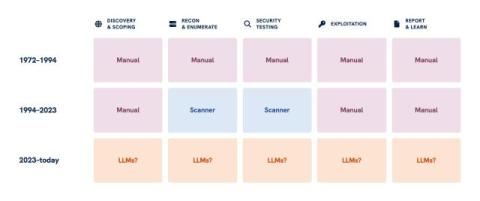
The classic external penetration testing takes a systematic approach that includes reconnaissance, enumeration, validation, and proof-of-concept exploitation. Enterprise security teams deploy comprehensive suites of tools across the entire application, offering full lifecycle testing, which loses value when the toolchain isn’t purpose-built for each testing phase.