Security | Threat Detection | Cyberattacks | DevSecOps | Compliance

Email encryption - the ultimate guide in 2023

Enterprise email encryption is a must-have security tool for anyone who wants to safeguard data that’s in transit. The truth is, there are numerous types and technologies available to help you with this, but what you need for your business ultimately depends on how seriously you want to take the protection of your own, and your clients’ or customers’ data.

3072-bit Key Length: Additional Strength to Code Signing Certificate

As data is becoming a critical asset and data breach incidents are increasing, the software is becoming a primary factor for both. And for securing it, Code Signing Certificate is a primary component software publishers use. Developers have recently been utilizing certificates with a 2048-bit key length. But, in 2021, a new policy was enacted, directing CAs to issue Code Signing Certificates with a 3072-Bit Key Length. The primary aim of defining such a standard was to strengthen security.

Enterprise data encryption - the ultimate guide in 2023

There’s no denying that the market for data encryption solutions is multifaceted and broad. But, it must be in order to keep up with modern security gaps and evolving threats. In this article, we’ll tell you about what enterprise data encryption is, why you should care about it, some of the different types of data encryption, and how SecureAge takes a unique approach to effectively protect enterprise data without compromising existing workflows or requiring a tech overhaul.

Exploring the differences between symmetric and asymmetric Encryption

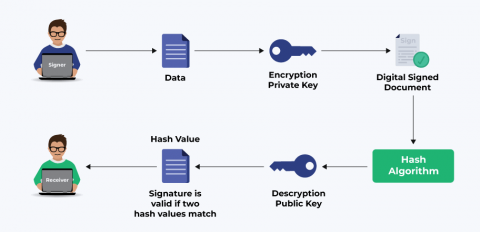
Data encryption goes back to ancient civilisations that used forms of message concealment, in peace as well as in wartime. The Egyptians used Disordered Hieroglyphics, the Greeks Steganography, the Spartans Scytale and the Romans, the Caesar Shift Cypher. While these basic methods laid the foundations for modern cryptography, what has evolved are two fundamental approaches based on complex mathematics: symmetric and asymmetric encryption.

Disk vs file encryption - which is better at Data breach prevention?

Data encryption is a bit like insurance - we all know we need it (a necessary evil you might say), but it’s difficult to decide what we need to protect, and with an increasing amount of options out there, it’s a mission in itself to find the right provider. That’s probably why when we take out insurance we tend to only get coverage when we feel it’s absolutely necessary – for example, for our property, our cars and when we travel.

How important is cryptography in network security?

“Please enter the one-time-password (OTP) that has been sent to your registered mobile number.” The next time you see a statement like this remember that there is a definite reason behind it. IT administrators utilize a variety of security methods, including hardware and software solutions, to secure network data against unauthorized access and other threats. These mechanisms are a preventive measure that ensure network security.

What is FIPS 140-2?

Encryption is an important security tool for protecting sensitive data. However, not all solutions used the same cipher techniques. There are a number of encryption algorithms that can be used to secure data with varying levels of security. To set acceptable standards for encryption technologies used by the U.S. Government the National Institute of Standards and Technology (NIST) has published the Federal Information Processing Standards (FIPS) series. These standards define how U.S.

Introducing NC Encrypt - Independent Encryption Key Management and BYOK Support for Microsoft 365 and SharePoint Server

We are pleased to announce the launch of NC Encrypt to provide independent encryption key management and Bring Your Own Key (BYOK) support for Microsoft 365 applications and SharePoint Server environments. The sheer number of communication and collaboration channels the M365 platform has introduced, increases the vulnerability of sensitive data and potential for accidental data loss or overexposure, making protection mechanisms such as encryption critical.