Security | Threat Detection | Cyberattacks | DevSecOps | Compliance

IIoT Data Hygiene: How Clean Telemetry Improves Reliability

IIoT data hygiene is the set of operational practices that ensure telemetry remains accurate, timely, and trustworthy for monitoring and analytics. In the rush to connect assets, teams often overlook the quality of the data stream itself, leading to noisy alerts and unreliable models. This article focuses on practical actions Ops teams can implement with low risk and limited engineering effort.

The New Mandate: CISA CPG 2.0 and the Evolution of Critical Infrastructure Security

The digital threats facing critical infrastructure—from energy grids and water treatment plants to hospitals and financial systems—are no longer theoretical. Nation-state actors and organized cybercrime are relentlessly targeting these essential services. The U.S. Cybersecurity and Infrastructure Security Agency (CISA) has responded with the updated Cybersecurity Performance Goals (CPG) 2.0, moving the industry beyond simple compliance toward verifiable cybersecurity resilience.

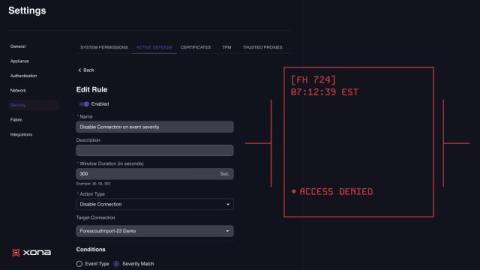
Are You in Control of Who is Accessing Your Critical Systems?

Remote access has become essential. However, for most industrial organizations, it’s also become the most dangerous blind spot in their cybersecurity posture. The tools many teams still rely on VPNs, jump servers, and shared logins that were never built for today’s OT and IT environments. These legacy systems were designed decades ago, when connectivity was simpler and threats were fewer.

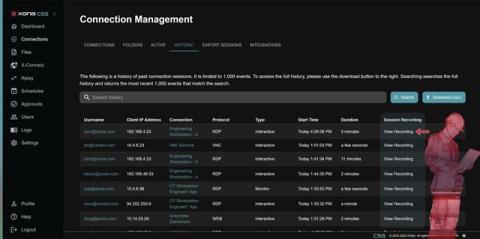
Disconnected Access Explained: How Xona Protects Critical Systems Without Network Connectivity

Remote access isn’t optional in critical infrastructure anymore; it’s operationally essential. Whether for maintenance, OEM support, remote field work, or incident response, industrial organizations must enable access to critical systems. But, legacy access methods like VPNs, jump servers, and even agent-based Zero Trust or IT-based remote privileged access management (RPAM) tools all share one dangerous flaw: they implicitly trust the endpoint.

Protecting the Systems that Sustain Us: Securing Critical Infrastructure During Cybersecurity Awareness Month

To close out Trustwave’s, A LevelBlue Company, Cybersecurity Awareness Month 2025 coverage, we will take a look at securing critical infrastructure, one of the focus areas for the Cybersecurity and Infrastructure Security Agency (CISA). For our complete coverage, please see: Cybersecurity Awareness Month 2025: The Value of MSSPs and Cybersecurity Awareness Month 2025: 4 Steps to Build a Cyber Strong America.

Reaching Peak Understanding of IoT and ICS Risk

In a world where internet connectivity intersects with just about every facet of our physical world—from cameras and door locks to power grids and factory robots—cyber risk intelligence has moved well beyond just protecting the bits and bytes of logical IT ecosystems. Security and risk professionals also have to be on the lookout for and aware of improperly secured cyber physical devices, like IoT devices, which greatly expand the enterprise attack surface.

Why ICS Cybersecurity Should Be a Top Priority for Industrial Organizations

The systems that manage our critical infrastructure-from power grids and water treatment plants to manufacturing lines and transportation networks-are the unseen engines of modern society. These Industrial Control Systems (ICS) are complex networks of hardware and software that monitor and control physical processes. For decades, they operated in isolated, air-gapped environments, separated from the corporate IT world. However, the convergence of Information Technology (IT) and Operational Technology (OT) has erased these traditional boundaries, exposing vital industrial processes to a landscape of sophisticated cyber threats.

Incident Command Systems: How To Establish an ICS

Standardizing the management and coordination of incident response and resolution activities across different independent agencies is challenging. As part of its mission to help people before, during, and after disasters, the Federal Emergency Management Agency (FEMA) created the Incident Command System (ICS) as one of the components of the National Incident Management System (NIMS).

When Electricity Meets Cyber: How Electric Firms Must Harden Their Systems

The electric sector is undergoing a digital revolution. From smart meters to automated substations, electricity providers now rely heavily on software, connected devices, and real-time data analytics. While this transformation drives efficiency, sustainability, and innovation, it also exposes power grids and electrical systems to cyber risks. As cyberattacks on critical infrastructure become more frequent, firms must not only harden their systems but also strengthen their workforce to meet this evolving challenge.

180,000 ICS/OT Devices and Counting: The Unforgivable Exposure

Remember when ICS malware was “rare”? Last year we got two new families built for one thing: disruption. FrostyGoop and Fuxnet are not Mirai with a wrench taped on or your typical DDoS botnet. They were built to target and disable devices that use Meter-bus and Modbus protocols, inflicting maximum damage. If you still believe that “our PLCs aren’t on the Internet,” then this is your nudge to actually go and check.