Forward Networks Named to Department of Homeland Security's Continuous Diagnostics and Mitigation Program's Approved Product List
Forward Enterprise approved for use in all five program pillars to help agencies improve their security posture.


“Zero trust” still confuses people—and for good reason. While the term conveys a certain absolute authority (“zero,” “nope,” “nothing”), contemporary approaches offer much more nuanced capabilities. And while zero trust today is typically associated with security initiatives, the concepts have their origin in the definition of network perimeters, who is granted access, and how that access is provided.
“Please enter the one-time-password (OTP) that has been sent to your registered mobile number.” The next time you see a statement like this remember that there is a definite reason behind it. IT administrators utilize a variety of security methods, including hardware and software solutions, to secure network data against unauthorized access and other threats. These mechanisms are a preventive measure that ensure network security.
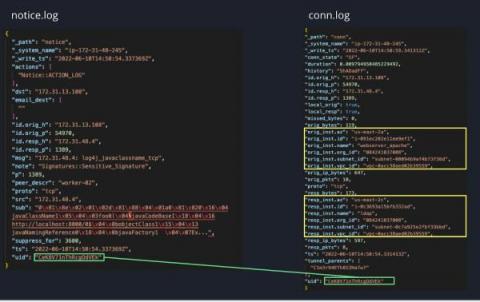
As organizations continue to rapidly adopt cloud services, they struggle to expand network detection and response (NDR) capabilities to their hybrid and multi-cloud environments. Network visibility is critical for security operations center (SOC) teams to secure their cloud environments and ensure they can elevate threat detection and incident investigation capabilities. However, traditional NDR solutions require management, configuration and often lack the security context needed.
ModSecurity is an open-source web application firewall (WAF) engine maintained by Trustwave. This blog post discusses multiple input interpretation weaknesses in the ModSecurity project. Each input interpretation weakness could allow a malicious actor to evade some ModSecurity rules. Both ModSecurity v2 and ModSecurity v3 were affected. The issues have been addressed in v2.9.6 and v3.0.8, respectively.