Security | Threat Detection | Cyberattacks | DevSecOps | Compliance

What Is a VPN and How Does It Work? (2026 Guide)

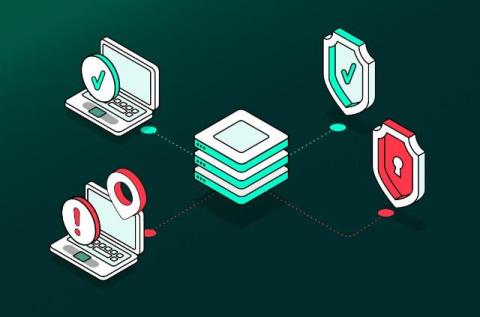
A VPN, or virtual private network, encrypts your internet traffic and routes it through a server in a location you choose. Your ISP, network operator, and the websites you visit see that server's IP address, not yours. That single mechanism covers every VPN use case: keeping your browsing history from your internet provider, securing a connection on public Wi-Fi, accessing a company network remotely, and reducing location-based tracking.

Secure private networking for everyone: users, nodes, agents, Workers - introducing Cloudflare Mesh

AI agents have changed how teams think about private network access. Your coding agent needs to query a staging database. Your production agent needs to call an internal API. Your personal AI assistant needs to reach a service running on your home network. The clients are no longer just humans or services. They're agents, running autonomously, making requests you didn't explicitly approve, against infrastructure you need to keep secure.

Lightboard Lab: Closing the Valley of Visibility in Network Vulnerability Assessment

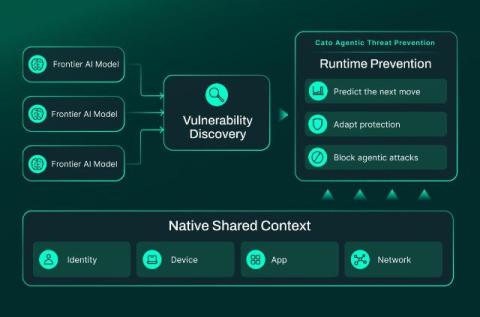
Network Vulnerability Assessment is often treated as a point-in-time exercise—but real environments don’t stand still. Between long scan cycles, two things are constantly changing: network devices drift as configurations and versions evolve, and the world around them shifts as new vulnerabilities are disclosed.

Episode 12 - The Agentic SOC: Upleveling Analysts with AI Knowledge Multipliers

Richard Bejtlich sits down with Stan Kiefer, Corelight’s Senior Manager for Data Science, to discuss how AI serves as a vital "abstraction layer" and "knowledge multiplier" for security analysts. Stan explains that while AI can synthesize complex information, it remains untrustworthy without high-fidelity network data at its center to provide verifiable evidence. The episode explores the shift toward an "agentic ecosystem" and a tiered architecture where a central orchestrator manages specialized sub-agents to accelerate detection and investigation.

Discover Your Network's Blind Spots Before It's Too Late

Advanced threats rarely break into infrastructure in obvious ways. In many cases, they remain hidden for months, exploiting blind spots created by unmanaged personal devices (BYOD), applications adopted without the IT department’s oversight (shadow IT), unauthorized access points, or compromised devices operating as part of botnets. As networks evolve into hybrid environments and most traffic is encrypted, the context becomes fragmented and the attack surface expands.

Modernizing threat detection with advanced ML: Corelight Sensor v.29 release highlights

Staying ahead of sophisticated attackers requires a security platform that evolves at the speed of the threat landscape. Today’s attackers are AI-enabled, increasing the number of attacks and targeting vulnerabilities more quickly than ever. That's why we are excited to announce the Corelight Sensor v.29 release, a significant step forward in our mission to provide critical detections backed by the world's best network evidence.

Q1 at AlgoSec: What innovations and milestones defined our start to 2026?

As we close out the first quarter of 2026, I find myself reflecting on a start to the year that was defined by product momentum, stronger market validation, growing trust from regulated organizations, and meaningful industry recognition. In just three months, AlgoSec introduced important platform enhancements, published fresh research on where network security is heading, strengthened its standing with government and highly regulated customers, and closed the quarter with three major awards.