Security | Threat Detection | Cyberattacks | DevSecOps | Compliance

Technical Blog: What you can't do with Kubernetes network policies (unless you use Calico): TLS Encryption

Kubernetes documentation clearly defines what use cases you can achieve using Kubernetes network policies and what you can’t. You are probably familiar with the scope of network policies and how to use them to secure your workload from undesirable connections. Although it is possible to cover the basics with Kubernetes native network policies, there is a list of use cases that you cannot implement by just using these policies.
How to secure the cluster in an air gap environment with Calico Cloud

The concern about securing the clusters has grown exponentially and one of the ways to secure it is by isolating the cluster from the Internet to lower the risk of eventual attack. Enterprises that deal with confidential customer data and work with regulatory agencies, such as financial and insurance institutions, require air gap environments for their clusters to create highly secure environments.

KeePass CVE-2023-32784: Detection of Processes Memory Dump

During May, a new vulnerability CVE-2023-32784 was discovered that affected KeePass. KeePass is a popular open source password manager which runs on Windows, Mac, or Linux. The vulnerability allows the extraction of the master key in cleartext from the memory of the process that was running. The master key will allow an attacker to access all the stored credentials. We strongly recommend updating to KeePass 2.54 to fix the vulnerability.

Container Security Fundamentals - Linux namespaces part 1: The mount namespace

One of the technologies used by Linux containers to provide an isolated environment, is namespaces. They are used to provide a contained process with an isolated view of different Linux resources. In this video we look at some of the details of how Linux namespaces work and then take a more detailed look at the mount namespace which isolates a processes' view of its filesystem.

Case study: Calico enables zero-trust security and policy automation at scale in a multi-cluster environment for Box

Box is a content cloud that helps organizations securely manage their entire content lifecycle from anywhere in the world, powering over 67% of Fortune 500 businesses. As a cloud-first SaaS, the company provides customers with an all-in-one content solution within a highly secure infrastructure, where organizations can work on any content, from projects and contracts to Federal Risk and Authorization Management Program (FedRAMP)-related content.

Reasons to Stick with Open Source Velero for your Kubernetes Backup and Recovery

I recently had a chance to speak with Chris Mellor at Block and Files about the emergence of Velero as the standard for Kubernetes data protection. I shared some ballpark estimates of market share across open source and commercial vendors to make my case. These numbers were obtained through diligent market research. They are estimates, but they are not imaginary.

Sysdig Enriched Process Trees, an Innovative Approach to Threat Detection

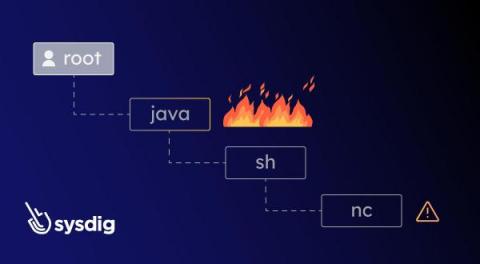
Discover how Sysdig Secure’s new Process Tree feature improves threat investigation. Imagine you’re investigating a security related detection, the investigation was triggered by the execution of stat/etc/shadow in one of your containers. Is this a sign of a legitimate activity, such as a developer debugging an app, or a sign that your container has been compromised? It depends on the context.

Sysdig Enriched Process Trees, an Innovative Approach to Threat Detection

Discover how Sysdig Secure’s new Process Tree feature improves threat investigation. In order to speed up the investigation of security events, Sysdig Secure now includes a process tree showing the attack journey from user to process, including process lineage, container and host information, malicious user details, and impact. In Linux systems, a process tree refers to the hierarchical representation of running processes on a system. It depicts the parent-child relationship between processes all the way to the root.

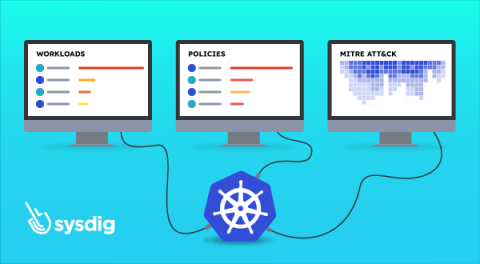
Responding Instantly to Kubernetes Threats with Sysdig Live

Discover how Sysdig Secure’s new “Kubernetes Live” informs of your Kubernetes security posture at a glance. The new Live feature allows you to evaluate and respond instantly to threats. It understands and dynamically maps the live infrastructure, workloads, and relationships between them, compared to static CSPMs or context-blind EDR products. Kubernetes Live simplifies investigation processes by offering a unified view Sysdig Secures Kubernetes related data. It aggregates information, from detection, to vulnerabilities to network access, into a single platform for easier oversight.