Security | Threat Detection | Cyberattacks | DevSecOps | Compliance



How To: Set Role Based Access Control on Web Dashboard 8.2.2
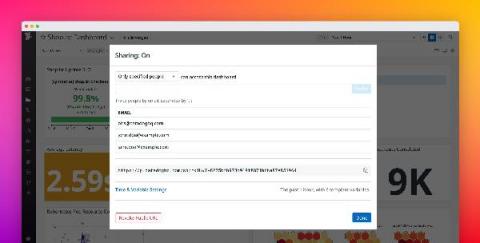
Share Datadog dashboards securely with anyone outside of your organization
Datadog dashboards provide a unified view of your application, infrastructure, and business data, giving stakeholders the context they need to make decisions. Sharing dashboards publicly is useful when you want to make them easily accessible to a large audience. But oftentimes, your dashboards include sensitive information, which is why you need finer-grained controls over the data you share—and who you share it with.

From a Single Pane of Glass, to Functional Dashboards to Manage Cyber Risk
For the longest time, or as far as I can remember, the holy grail of all networking platforms has been the need for a single pane of glass, that single source of all information that you would need to be most effective. So, what is a single pane of glass?
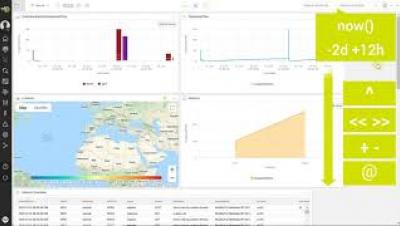
Activeboards Calendars - Setting time ranges manually
Table of Contents:
00:00 - Introduction
01:02 - Setting absolute time ranges
01:49 - Setting relative and snap to time ranges
02:21 - Time expressions example 1
02:56 - Time expressions example 2
03:26 - Omitted periods in time ranges
Activeboards - Active Refresh
Table of Contents:
00:00 - Introduction
00:50 - Manual refresh
01:20 - Periodic refresh
02:02 - Periodic refresh with real-time data
02:27 - Periodic refresh and manual refresh
02:47 - Periodic refresh and widget operations
How to Customize a Dashboard on Logsign SIEM?
Dashboards are an integral part of a SIEM solution as they help you in visualizing the security of your organization’s technical infrastructure in real-time. In our last article, we discussed in detail about the pre-configured dashboards on Logsign SIEM and the information they present for your security team. From threat intelligence to identity management, what types of dashboards are available under each category.
What are The Types of Dashboards in a SIEM Solution?
Dashboards are an integral component of any effective SIEM solution. After log data is aggregated from different sources, a SIEM solution prepares the data for analysis after normalization. The outcomes of this analysis are presented in the form of actionable insights through dashboards. Many SIEM solutions come with pre-configured dashboards to simplify the onboarding process for your team. Besides, an ideal solution should also allow an organization to customize dashboards as per its requirements.
Dashboards: An Effective Cybersecurity Tool
Data is only as good as what you are able to do with it. Not only does the cybersecurity universe collect data, but individual enterprises also collect cybersecurity data from within their organization as well as from external sources in order to add to more context and relevance. All data needs to be analyzed in order to create actionable insights.