Security | Threat Detection | Cyberattacks | DevSecOps | Compliance

Unlocking AI's Potential: Network Trends and Challenges

Artificial intelligence is no longer just an overused buzzword; it’s a fundamental shift in how businesses operate. The Architects of AI were just named as Time’s person of the year for 2025. From generative AI creating code to machine learning algorithms optimizing supply chains, the demand for AI is reshaping the technology landscape. But here’s the thing: all that computational power is useless if your data can’t move fast enough.
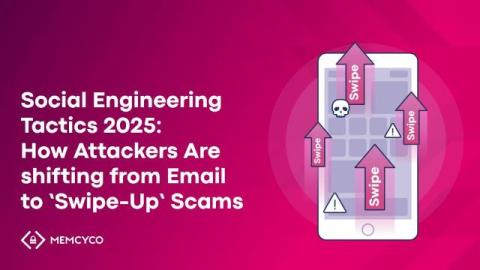

Social Engineering Tactics 2026: How Attackers Are shifting from Email to 'Swipe-Up' Scams

The image of the cyber attacker is changing. For years, the industry focused on email gateways and typo-squatted domains like citi-bank-security.com. But according to Tzoor Cohen, CTI Lead at Memcyco, the battleground has shifted. In 2026, the most dangerous social engineering tactics typically don’t start in an inbox. They start on social media, utilize legitimate infrastructure like Bitly, and exploit the user interface (UI) of mobile devices to hide malicious intent.

Apache Commons Text Code Injection Vulnerability (CVE-2025-46295)

A critical code injection vulnerability has been identified in Apache Commons Text, a widely used Java library for text processing and interpolation. Tracked as CVE-2025-46295, the vulnerability carries a CVSS v3 score of 9.8 (Critical) and affects all versions of the library prior to 1.10.0. The vulnerability has an EPSS score of 0.253%, indicating a low short-term probability of exploitation.

New Configuration Change History in Forward Enterprise

Modern networks change constantly as teams modify interfaces, adjust routing, enable features, or deploy security controls. Over time, these individual updates create a complex configuration history that is rarely documented comprehensively. Without access to historical configuration data, engineers face significant challenges determining when changes occurred, whether they align with approved change windows, or how they influenced network behavior.

Ensuring API Testing Meets Compliance: Policies, Performance, and Proof

APIs sit at the center of modern applications. They move data between systems, power mobile apps, and enable integrations at scale. Naturally, they are also a focal point for regulators, auditors, and attackers. Most organizations today do test their APIs. Yet many still struggle during audits. Not because testing didn’t happen, but because it wasn’t consistent, governed, or provable. Compliance frameworks don’t ask whether you ran an API scan.

The Best Ticketing Tool(s): The Complete Guide for MSPs and IT Service Providers

Nowadays, businesses of all sizes rely on MSPs and IT service providers for key functions such as cybersecurity, cloud management, and digital transformation, because it is often more cost-effective and efficient than handling these tasks in-house. However, that places enormous pressure on those providers because they are expected to solve a wide range of problems around the clock.

SIEM Requirements for MSPs: What You Need to Get Right

SIEM is a streamlined tool used by managed service providers (MSPs) to monitor activity across their clients’ systems in real time. The tool brings security data into one place. This makes it easier to spot suspicious activity early and respond quickly if something goes wrong. SIEM provides MSPs with a single, clear view of their environment to improve day-to-day monitoring. It also takes less time to investigate security incidents.

API Security Trends 2026: Strategies, Risks & Solutions

In 2026, API security trends reveal a humbling reality. 99% of organizations have experienced at least one API security incident in the past year, with API-related breaches accounting for over 90% of all web-based attacks. Unlike yesterday’s perimeter-based threats, today’s API security challenges are fundamentally different. For every human identity, there exists ~ 82 machine identities, with >40% of those holding privilege/sensitive access within organisations.

Remediation Coordination Breaks Down When Assets Have No Owner

Remediation coordination often fails because security teams are dealing with unowned assets and resources. In this hands-on demo, Seemplicity Exposure Management Strategist Rob Babb shows how ownership gaps create blind spots, stall remediation, and slow exposure reduction across teams. The walkthrough highlights how remediation orchestration establishes accountability, improves visibility, and enables automation for exposure remediation across cloud, application, and infrastructure environments.

How Precision Manufacturing Strengthens Modern Supply Chain Security

In today's increasingly interconnected global economy, supply chains are more complex and more vulnerable than ever before. Unexpected disruptions, quality inconsistencies, and rising consumer expectations demand that every component used in production meets strict standards. This is where precision manufacturing plays a central role. By ensuring that even the smallest part is produced with accuracy and consistency, companies are able to maintain operational stability and product reliability.