Security | Threat Detection | Cyberattacks | DevSecOps | Compliance

Why Measuring Security ROI Matters

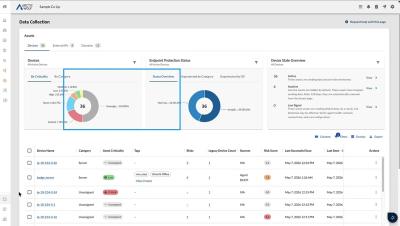
Security investment only matters if it can be measured. In this roundtable, Josh Jones makes a straightforward point: security leaders need a way to quantify whether their investments are actually producing outcomes that can be explained to executives and boards. That challenge isn’t about buying more tools. It’s about answering basic questions: What are our tools actually doing? Where are controls misaligned or underused?

The Comprehensive Guide to Brand Protection in 2026

Let’s be honest: in 2026, the traditional “firewall” is a bit of a relic. Having spent years analyzing how threat actors operate, I can tell you they aren’t banging on your front door anymore. Why would they? It’s much easier to build a pixel-perfect replica of your front door down the street and trick your customers into handing over their keys there.

Can WAF prevent browser attacks that break PCI compliance?

The answer to whether WAF can see and prevent browser attacks that break PCI compliance depends on the lens you use. Through the lens of Requirement 6.4.2, the answer is mostly yes. But through the lens of 6.4.3 and 11.6.1, it gets a little blurry. Requirement 6.4.2 is about stopping web-based attacks at the application layer by inspecting outbound and inbound HTTP traffic at the server side.

Can Cloud Scanners Detect Insecure IAM Roles and Permissions?

In cloud service providers (CSPs) such as AWS, Azure, and Google Cloud Platform (GCP), Identity and Access Management (IAM) controls who has access to which resources through roles, policies, and permissions. IAM is about who can do what, like letting a developer read from a Database, but not delete it. Misconfigured IAM, such as roles with unnecessary privileges, is the common cause of unauthorized access/exploit/ data breaches, and resource abuse.

Understanding the LLM Mobile Landscape in Enterprise Technology

Mobile security has always been complex, but LLM technology has added a whole new dimension to the field. Behind every popular generative AI (genAI) tool is a comprehensive large language model (LLM) that provides data and parses queries in natural language. When used responsibly, LLMs can be useful tools for ideation and content generation. In the wrong hands, though, LLMs can help threat actors supercharge their social engineering scams.

Anatomy of a Vishing Attack: Technical Indicators IT Managers Need to Track

If your organization hasn’t encountered a vishing attack yet, it’s probably only a matter of time. Vishing, or voice phishing, is a sophisticated type of social engineering that adds a whole new dimension to common scams. Rather than emails or text messages, threat actors employ phone calls or online voice calls to carry out vishing schemes. Particularly savvy attackers can even copy a real person’s voice to deceive, coerce, or manipulate potential victims.

Best Cloud Compliance Tools in 2026: From Audit-Prep to Runtime Verification

What are the three types of cloud compliance tools? Audit-prep platforms (Drata, Vanta) automate evidence collection for certifications. Security posture management/CSPM (Wiz, Prisma Cloud) scan configurations at a point in time. Runtime compliance verification (ARMO, Sysdig) monitors actual workload behavior continuously. Choosing the wrong type means solving for the wrong problem. What is compliance drift and why does it matter? The gap between your last scan and your current state.