Zero Trust Architecture explained

With the increase in frequency, sophistication, and cost of cyberattacks, the global focus on cybersecurity is at an all-time high. However, the goalposts for those tasked with protecting businesses have shifted. Hackers have a growing number of ways they can compromise a business and are frequently looking to move laterally within an organization, using credentialed (and often elevated) access.
Securing and Monitoring AWS Container Services

Developers, operations, and security teams must work together to address key workflows to secure and monitor containers, Kubernetes and cloud services across the entire cloud-native lifecycle. By addressing mage scanning, runtime security, and compliance, along with monitoring for Kubernetes, container, applications, and cloud services you can automate protection and performance management to accelerate cloud adoption.

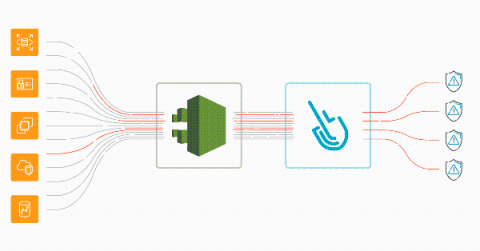
AWS threat detection using CloudTrail and Sysdig Secure

Implementing AWS threat detection with Sysdig Secure takes just a few minutes. Discover how to improve the security of your cloud infrastructure using AWS CloudTrail and Sysdig Cloud Connector. With the rise of microservices and DevOps practices, a new level of dangerous actors threatens the cloud environment that governs all of your infrastructure. A malicious or inattentive cloud API request could have a sizable impact on availability, performance, and last but not least, billing.

Leaky Images: Accidental Exposure and Malware in Google Photos and Hangouts

Did you know that the default link sharing option in Google Photos allows anyone with the link to view the files and all images shared in Google Hangouts that are publicly accessible? In this edition of our leaky app series, we will cover how image link sharing in Google Hangouts and Google Photos can lead to the accidental public exposure of sensitive data. We will also look at the threat detection capabilities of Google Photos and Google Hangouts.

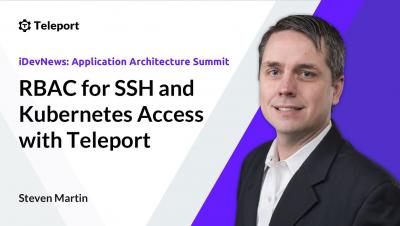
iDevNews Application Architecture Summit 2020 | RBAC for SSH and Kubernetes Access with Teleport

Enterprises are best served by leveraging an RBAC system to manage access to their SSH and Kubernetes resources. With Teleport, an open source software, employers are able to provide granular access controls to developers based on the access they need and when they need it. This makes it possible for employers to maintain secure access without getting in the way of their developers’ daily operations. Join Steven Martin, Solution Engineer at Gravitational, as he demonstrates how to assign access to developers and SRE’s across environments with Teleport through roles mapped from enterprises’ identity providers or SSOs.

Stories from the SOC - Cloud and On-site Protection

One of the benefits of having your managed detection and response (MDR) service managed by AT&T Cybersecurity is the visibility into threats from a large number of customers of all sizes and across different industries. This allows the team to take what they learn from one customer and apply it to another. Our security operation center (SOC) analysts were able to use an OTX alarm and an AWS correlation rule to discover open ports on public facing servers for two different customers in 24 hours.

How to Use SIEM Effectively?

In the last article, we talked about the top 5 SIEM reports and how you can generate them on the Logsign SIEM platform. We covered reports related to user accounts, file access, user/group changes, threats, and attacks. This article will show how you can effectively use the Logsign SIEM platform along the lines of the most popular use cases. A use case is defined as a series of actions or events between a system and a user that achieve a particular goal.