Recently I attended another great Evanta CIO event, and in the course of a day packed with excellent talks and knowledge-sharing opportunities, I had the opportunity to sit down and discuss the topic of network and security transformation with Stuart Hughes, the CIDO at Rolls Royce. Stuart shared his experiences over the past 18 months, discussing how the pandemic—among other things—had changed his strategic approach to security.
While data security has been an important topic since the internet’s inception, the issue is experiencing renewed prominence as platforms collect and struggle to secure copious amounts of personal information and prevent cyberthreats at the same time. The early 2000s were characterized by unprecedented growth and participation in the digital data economy, but the 2010s saw the creeping consequences of this ecosystem.
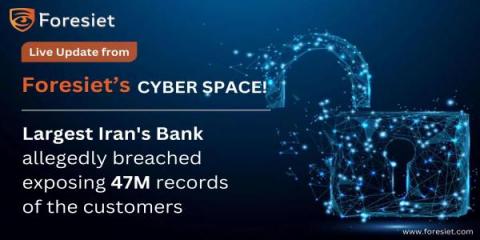
Recently, while performing a deep inspection of the dark web through Foresiet DigiRisk Platform, our Cyber Research and Support Team (FCRST) noticed, 33M records of Iran Bank were found breached and available. Our researcher has validated the data and it's very scary and has complete information including Account detail, card detail, PII information.
Data loss refers to the unwanted removal of sensitive information either due to an information system error, or theft by cybercriminals. Data leaks are unauthorized exposures of sensitive information through vulnerabilities on the digital landscape. Data leaks are more complex to detect and remediate, they usually occur at the interface of critical systems, both internally and throughout the vendor network.