Security | Threat Detection | Cyberattacks | DevSecOps | Compliance

Why I'm Finally Ditching YUM for DNF in 2026 (And You Should, Too)

If you’ve been managing Red Hat-based systems as long as I have, yum install is likely hardcoded into your muscle memory. For decades, YUM (Yellowdog Updater, Modified) served as the backbone of RPM Linux-based distributions, getting us through countless server setups and late-night patches. But the era of YUM is officially over. With RHEL 9, Fedora, and Rocky Linux fully embracing DNF, YUM has moved from “reliable veteran” to “legacy technical debt.”


Integrating Darknet Intelligence, AI-Powered Cloud Attack Simulation & Automated Brand Protection

In the fast-paced digital underworld of February 2026, where threats morph daily amid law enforcement pressures, our intelligence team uncovers a landscape dominated by resilient darknet markets and fragmented forums fueling cybercrime. These spaces, once centralized, now scatter across encrypted channels, driving everything from credential theft to coordinated attacks that ripple through global supply chains.

CCPA consent vs opt-out: What websites Get Wrong About User Choice

If you have a consent banner, a Do Not Sell link, and a preferences database logging every opt-out, you’re CCPA compliant, right? Not really. In July 2025, Healthline Media settled with the California Attorney General for $1.55 million. That’s one of the largest CCPA fines to date. They had opt-out forms. They had GPC support. They had a preference database. Yet, after users exercised all three, investigators found that 118 cookies were still active and 82 tracking tags were still operating.

Tag Manager Security: How to Control GTM, Adobe Launch & Tealium for Privacy Compliance

Marketing needs to ship campaigns in hours. IT and engineering move in days. Tag managers live at the center of that conflict. They’re essential infrastructure, enabling marketing velocity by letting marketing teams deploy analytics, advertising pixels, and conversion tracking without IT or production bottlenecks. So campaigns launch faster, testing happens in real time, and teams optimize performance mid-campaign. But that same architecture can create compliance exposure.

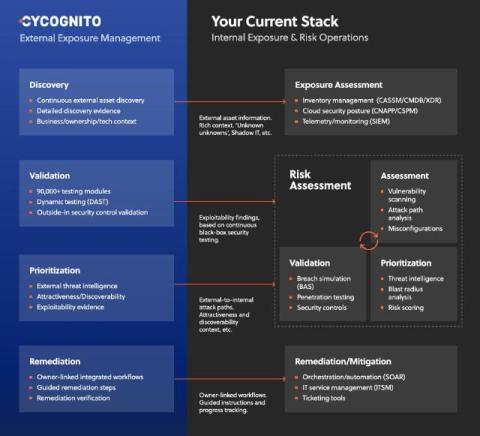
Permission to Ignore: Leveraging the CTEM Framework to Focus on Real Risk

Security frameworks have always had a gap. They tell you to find vulnerabilities and fix them, but they’ve rarely provided a system to determine which ones actually matter before you tap into your most expensive resource: engineering time. CTEM changes the game by treating security as a continuous lifecycle rather than a series of silos.

1,500% Surge in New Malware: Why MSPs Must Act Now

The latest findings from WatchGuard Technologies reveal a stark reality for managed service providers: cyber threats are not only increasing—they’re evolving faster than traditional defenses can keep up. In its newest Internet Security Report, WatchGuard identified a 1,548% spike in new, unique malware from Q3 to Q4 2025. Nearly one in four threats bypassed signature-based detection, highlighting a critical gap in reactive security models still used across many customer environments.

From Data to Action: Key Insights About Advancing Security Practices

The cybersecurity landscape is in constant flux, shaped by emerging technologies, evolving threats, and increasing regulatory demands. As organisations strive to protect their digital ecosystems, the challenge isn’t just collecting data—it’s turning that data into actionable strategies that drive meaningful change. Next week, we’ll unveil the 16th edition of Veracode’s flagship State of Software Security (SoSS) report—a cornerstone of the cybersecurity calendar.

Report: AI-Driven Fraud Surged by 1200% in December 2025

AI-driven fraud attacks spiked by more than 1200% in December 2025, according to a new report by Pindrop Security. Threat actors are using AI to assist in every stage of the attack, from deploying bots to conduct reconnaissance to using deepfakes to trick humans. “According to Pindrop internal data, AI fraud (or non-live fraud) surged 1210% by December 2025,” the researchers write.

AI-Assisted Social Engineering Attacks Continue to Rise

Social engineering remained the top initial access vector for cyberattacks in 2025, with increasing assistance from AI tools, according to a report from ThreatDown. The researchers warn that AI will likely become a core component of social engineering attacks throughout 2026. “Deepfake voice, image, and video impersonation now requires minimal expertise and only a handful of reference images or seconds of audio,” the researchers write.