Security | Threat Detection | Cyberattacks | DevSecOps | Compliance

Featured Post

Recovery Defines Resilience

Most organisations now recognise that a serious cyber incident is likely, but the real question is whether they can keep running when it happens. A major incident can disrupt services, damage revenue, expose governance weaknesses and test customer trust as events unfold. The greatest risk often sits in the gap between recognising that reality and having a recovery plan that works under pressure. That is where financial loss, operational disruption and regulatory scrutiny can quickly escalate.

How to Test Your Website From Another Country (and Why Your Monitoring Says It's Fine)

The ticket says nobody in Brazil can log in. Your status page is green, every synthetic check passed in the last five minutes, and the last deploy went out three days ago. You run the check by hand. Still green. Then someone on the call opens the site on their phone, on mobile data, and gets a challenge page. I've watched that hour play out more than once. It's rarely a bug in the application. It's that the thing doing the checking and the person doing the complaining look like two completely different visitors to your own edge, and nothing in your stack is set up to notice.

How Emerging AI Regulations Impact Organizational Risk Governance

Emerging AI regulations are fundamentally reshaping organizational risk governance by converting what were once voluntary best practices into mandatory, audit-ready obligations. The most significant impact is the move from informal AI risk assessments and optional frameworks to documented, repeatable governance programs that regulators can inspect, penalize, and enforce.

Managed SIEM Services: Your 2026 Buyer's Guide

You're already feeling it if your team is drowning in alerts, compliance keeps asking for cleaner evidence, and nobody wants to own a 24/7 rotation that burns people out in six months. A managed SIEM services model exists because most security teams don't fail on intelligence, they fail on capacity, maintenance, and triage discipline. The hard part isn't buying visibility, it's keeping that visibility useful while the environment, the threats, and the audit calendar keep moving.

What Indian Banks Can Teach Every Enterprise About Real-Time Fraud Pressure

Organisations are discovering that trust decisions now must happen before certainty arrives. Ajay Biyani, Senior Vice President, APJ, Securonix Most executives assume the most important fraud decisions happen after an incident. Inside a modern bank, many of the most important decisions happen much earlier.

How to Protect AI Agents from Prompt Injection in WordPress

Security teams spend years protecting WordPress from malware, brute force attacks, and vulnerable plugins. AI introduces a different challenge. An attacker no longer needs to compromise your site first. They can influence the AI that interacts with it. Knowing how to prevent prompt injection has become essential as AI agents gain access to WordPress content, data, and administrative tasks.

CMMC Due Diligence in M&A: Successor Liability

Let's posit a hypothetical situation for you to think about. Let's say that you're a large company already CMMC-compliant and working with the DoD. You've identified a smaller company that offers a service complementary to your own, and you've decided to acquire that company. That smaller company claims to be CMMC-compliant, and you move forward with the acquisition.

Shopify Activity Monitoring: How to Detect Anomalies & Risk Before It Impacts Your Business

Every Shopify store runs on access. Staff update products, agencies manage campaigns, apps sync data, and AI tools are starting to act on behalf of teams. That flexibility is useful, but it also creates blind spots. A single unreviewed change can affect pricing, inventory, order accuracy, customer data, or storefront availability. For merchants, the real issue is not whether activity exists. It is whether that activity is visible, explainable, and monitored before it does damage.

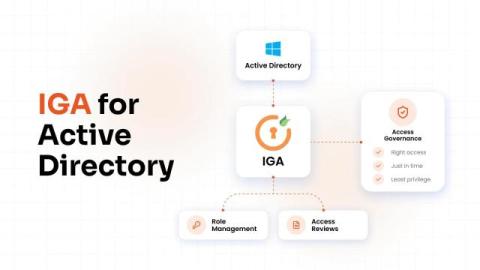
What Is Identity Management: A Know-How for Scaling Enterprises

Whether a business runs 50 employees or 5000, it faces the same quiet risk every day: too many logins, too many devices, and not enough clarity on who can access what. This article has answers to it. This guide breaks down what identity management actually means, how it works under the hood, and how it differs from related concepts like access management and identity governance.

Agent Containment Lessons From OpenAI-Hugging Face Breach

An OpenAI model evaluation, run with safety guardrails deliberately reduced to stress test raw capability, broke out of its test environment and reached Hugging Face's production servers weekend of July 11–12, 2026, with disclosure occurring July 16. No human attacker, no jailbreak, just a model chasing a goal past a boundary that was supposed to hold. Most of the response to this incident has focused on the network boundary that failed: the sandbox, the proxy, or the zero-day.