Security | Threat Detection | Cyberattacks | DevSecOps | Compliance

Calculate the Cost of A Data Breach

The worst-case scenario happens: Your organization suffers a data breach. It’s going to take time to clean it up, the business’ reputation may take a hit, and there’s the major issue of cost. How much does cleanup cost? What if it’s a ransomware attack where your organization must pay the ransom? What other specialists will you have to hire—and how much will you need to pay them?


Cyber Risk Intelligence: County Government Cyber Incident May Have Involved Social Engineering and Targeting of Vulnerable SSH Services

The government of a U.S. county announced on September 11 that a recent cyber incident had disrupted its online services. Subsequent coverage of the event has noted that it strongly resembles a ransomware attack. The disruption comes against a backdrop of frequent ransomware activity targeting state and local governments and the education sector.

Five Password Management Best Practices to Keep You Safe

Love them or hate them, passwords are often the only thing standing between attackers and your sensitive personal and financial information. Despite their importance, less than 50% of people feel very confident that their passwords are secure from compromise, according to a 2021 Security.org survey of password habits. There’s probably a good reason many are worried about their passwords.

Datadog alternatives for cloud security and application monitoring

If you work in IT or DevOps, unless you’ve been living on a remote island without Internet access, you’ve likely heard of Datadog, a popular platform for monitoring cloud applications. Datadog collects and interprets data from various IT resources. The resulting insights assist in managing performance and reliability challenges to deliver a better end-user experience.

Monitor your firewalls on the go with Firewall Analyzer's mobile app

The number of cybersecurity events faced by companies and businesses across the globe has grown exponentially since the pandemic began. Without adequate network security monitoring practices and around-the-clock monitoring in place, the chances of a cyber incident happening are highly likely. However, not all companies can afford to have a team of highly trained network admins watching over their network 24×7.

Sponsored Post

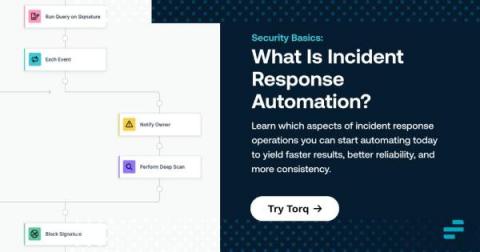
Security Basics: Incident Response and Automation

Incident response is one of the most challenging tasks that IT teams face. It's challenging not just because it typically involves many stakeholders and moving pieces, but also because teams usually face pressure to respond as quickly as possible. That's why investing in incident response automation is a wise choice. Although it may not be possible to automate every aspect of every incident response workflow, being able to automate at least the major elements of incident response will yield incident management processes that are faster, more reliable, and more consistent.Keep reading to learn about the components of incident response and which incident response activities to start automating.

Five Cybersecurity Scams Where Seniors Are Especially Vulnerable

The FBI’s 2021 Elder Fraud Report leads off with a staggering, sobering statistic: adults 60 and over were swindled out of $1.7 billion dollars last year. That’s with a B. Even worse, that marks an increase of 74% year-over-year. Clearly seniors are an attractive target for cybercriminals. Here are five of their favorite ways to target our elders, and what can be done to stop them.

Protecting DOD controlled unclassified information (CUI) from getting into the wrong hands

archTIS Director of Federal and Defense, Bill Kalogeros recently presented a CMMC 2.0 Workshop with FCW on new controlled unclassified information or ‘CUI’ marking requirements for CMMC 2.0 which is expected to go into effect in May of 2023. Here’s a summary of his session and a link to the recording to learn more about the pending changes to CUI handling and how to prepare.

Money Laundering in the Metaverse: NFTs, DeFi

According to a recent analysis, 17 million Ethereum transactions between Q4 2017 and Q1 2022 were associated with both criminal and licit operations. The overall cyber money laundering activities increased by 30% in 2021 compared to 2020, with hackers laundering a total of US$8.6 billion in cryptocurrencies.