Security | Threat Detection | Cyberattacks | DevSecOps | Compliance

The new reality for acquirers: blocking transactions that trigger card scheme penalties

Picture this: Your payments team starts the week with what looks like a routine performance review. Authorization rates are slightly off. A handful of merchants are seeing more retries than usual. Declines are climbing in one segment of the portfolio. But nothing looks catastrophic…yet. Then the warning signs start stacking up. An AI-driven BIN attack has quietly pushed enumeration activity higher. A few merchants are generating abnormal dispute patterns.

Athletes Are Increasingly Targeted by Social Engineering Attacks

Scammers are increasingly targeting athletes with advanced social engineering attacks, the Guardian reports. The Guardian cites a recent report from Ernst & Young that found that athletes and teams have lost nearly $1 billion to fraud over the past twenty years, and more than 40% of these losses were reported in the past six years.

Warning: Scammers are Exploiting Geopolitical Unrest

Scammers are taking advantage of the conflicts in the Middle East and Ukraine to exploit people’s emotions, according to researchers at ESET. “Geopolitical turmoil often leads to human misery, which tends to pull at the heartstrings,” ESET says. “Legitimate charities may solicit donations to help their efforts to support innocent citizens caught in the crossfire.

Brand Impersonation Protection: How to Detect, Disrupt, and Stop Impersonation Attacks

Brand impersonation protection helps enterprises detect, disrupt, and stop impersonation attacks where criminals imitate trusted brands, websites, apps, domains, ads, or digital journeys to deceive users and steal credentials, data, money, or access. The goal is not to stop every fake asset from ever appearing. That is not realistic.

How digital banking is redefining fraud prevention

The banking industry stands at a critical intersection of technology, security, and customer experience. As financial institutions navigate massive data volumes and increasingly sophisticated threats, they’re also trying to survive the digital transformation that’s made customer expectations higher than ever and trust more fragile than before.

Free Gift Fallacy: How Attackers Harvest Credit Cards via Fake Surveys

The classic 'survey reward' scam is back and hitting harder than ever. KnowBe4 Threat Labs is tracking a massive, high-volume campaign that is not only impersonating a wide array of trusted global brands across retail, logistics, and healthcare, but is using hundreds of newly registered domains (NRDs) and sophisticated psychological priming to fly past traditional security defenses.

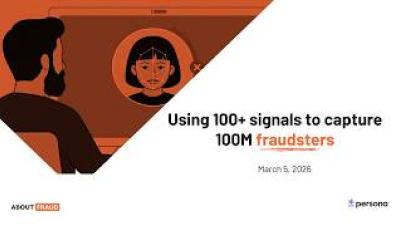
8 ways I use Graph to uncover fraud rings

As a fraud analyst at Persona, I have to balance working on fraud escalations for specific customers and keeping an eye on cross-customer (and cross-industry and cross-region) fraud trends. The work naturally overlaps, as one escalation can turn into a trend as fraud rings move on to new targets. And, getting ahead of large trends helps us stop escalations. I have a lot of tools at my disposal, but I want to discuss Graph, Persona’s real-time link analysis product.

Why Kuwait's WAMD penalty framework demands real-time payment visibility and in-flight fraud prevention

When Kuwait launched the WAMD real-time payment rail in 2024, the goal was clear: Enable banks and financial institutions to add speed, convenience and resilience to the country’s national payment infrastructure. Facilitated by the KNET Payment Gateway under the supervision of the Central Bank of Kuwait (CBK), the service has become such a key part of the country’s digital banking ecosystem that the CBK is making it crystal clear that real-time must also mean reliable.

Brand Impersonation Protection vs Domain Takedown: What Security Teams Actually Need

Brand impersonation protection is often evaluated by how quickly fake domains, cloned pages, scam ads, and impersonation assets can be removed. That metric matters, but it does not answer the more important security question: who was exposed while the asset was live, and what risk did that exposure create? Domain takedown reduces the life of an impersonation asset.

The Nigerian Prince Scam Is Still Working - Here's How to Spot It

Think the Nigerian Prince email scam is ancient history? Think again. Also known as the 419 scam, this classic con has evolved way beyond your inbox — showing up on social media, dating apps, and even phone calls. In this video, we break down exactly how the scam works: the emotional storytelling, the upfront fee trap, and why people — smart people — still fall for it. Spoiler: scammers are now using AI to make their messages more convincing than ever, without the telltale spelling mistakes you used to rely on.