Security | Threat Detection | Cyberattacks | DevSecOps | Compliance


Trend Micro & Snyk - Better together
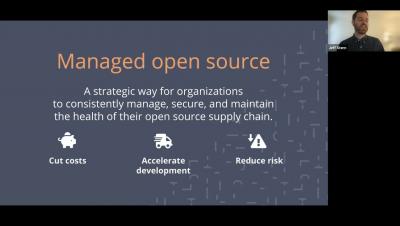
Keep OSS supply chain attacks off the menu: Tidelift catalogs + JFrog serve known-good components

Misconfigurations, known unpatched vulnerabilities, and Cloud Native Application Security
Two weeks back, we published our annual State of Cloud Native Application Security report. If you haven’t seen it yet, here’s a TL;DR. We surveyed nearly 600 developers and security professionals to see how the shift to cloud native (digital transformation) has changed their security posture. Then we parsed the results, gleaned valuable insights, and put them in an interactive webpage.
Scaling for DevSecOps with the Norwegian Labour and Welfare Administration
Application development has changed, and development teams have begun supporting a model of rapid and frequent deployments to support the pace of innovation demanded by digital transformation. From an application security perspective, this means scaling through DevSecOps and supporting developer-first security. The unique challenges and solutions for shifting to DevSecOps were the subject of a recent roundtable discussion featuring Aner Mazur, Chief Product Officer at Snyk and Christer Edvartsen, Sr.

Reducing Enterprise AppSec Risks: Ponemon Report Key Takeaways
Ponemon Institute’s Reducing Enterprise Application Security Risks: More Work Needs to Be Done looks at the reasons why many enterprises consider the application layer to be the highest security risk. Ponemon Institute, in partnership with WhiteSource, surveyed 634 IT and IT security practitioners about their enterprises’ approach to securing applications.

Prevent cloud misconfigurations in HashiCorp Terraform with Snyk IaC
We’re delighted to share new features of Snyk Infrastructure as Code (Snyk IaC) designed to support how Terraform users write, plan, and apply their configurations. With Snyk IaC, you can get immediate guidance on security configurations as you write, and scan your Terraform plans in your deployment pipelines to ensure your changes and complete configuration are safe.
Snyk Acquires FossID to Accelerate Worldwide Developer-First Security Adoption
Joining forces with FossID to extend developer-first security to C/C++ applications
I’m excited to announce the acquisition of FossID, extending Snyk’s developer-first security capabilities with deeper C/C++ support and enhanced license compliance! Snyk’s vision has always been to empower developers to secure their applications, enabling the speed and scale required by technology-driven companies.