Security | Threat Detection | Cyberattacks | DevSecOps | Compliance

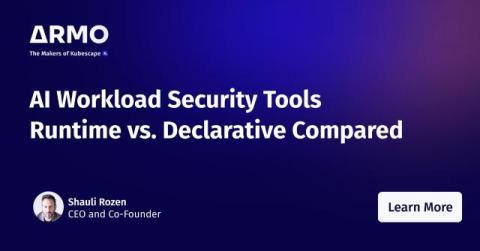
Top CWPP Tools for Kubernetes 2026 - Comparison Guide

What is a Cloud Workload Protection Platform (CWPP)? A CWPP is a security tool that protects running workloads—containers, virtual machines, and serverless functions—across their entire lifecycle. For Kubernetes environments, this means protecting pods and containers from build time through deployment and into production runtime, covering threats like cryptomining, reverse shells, and lateral movement.

You can't rely on open source for security - not even when AI is involved

Open source libraries, packages, and models power nearly every product team today. They accelerate development, democratize innovation, and let teams stand on the shoulders of giants. But there’s a dangerous assumption creeping into engineering orgs: that open source — or AI trained on open source — will keep your software safe. That assumption is wrong. Open source gives you speed and community, not guaranteed security.

How to Rent a Server from Deltahost.com: A Step-by-Step Guide

Renting a server is no longer a task reserved for large enterprises or highly specialized IT teams. Today, startups, small businesses, e-commerce platforms, SaaS products, and content-driven websites all rely on rented servers to ensure stable performance, scalability, and security.

Kubernetes PVC Backup with CloudCasa: A Step-by-Step Guide to Protect Persistent Volumes

Kubernetes applications often rely on Persistent Volume Claims (PVCs) to store critical data, from databases to user uploads. Losing this data due to cluster failures or accidents can be catastrophic for DevOps teams. In this post, we’ll walk through how to safeguard your Kubernetes PVCs using CloudCasa, a backup-as-a-service platform.

Why Small DME Providers Are Switching to Cloud-Based Solutions

The durable medical equipment industry has undergone significant transformation over the past five years. Traditional paper-based systems that once dominated the sector are rapidly being replaced by digital alternatives. Modern DME software has become essential for providers looking to streamline operations, reduce errors, and maintain compliance with ever-changing healthcare regulations. Small and mid-sized suppliers are discovering that cloud-based platforms offer advantages previously available only to larger organizations with substantial IT budgets.

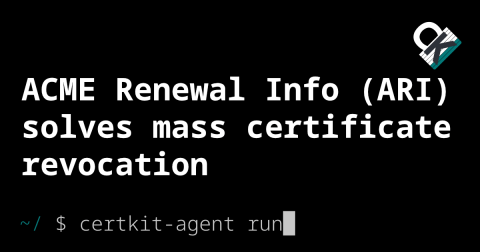
Your servers shouldn't need to know ACME

CertBot assumes every server that needs a certificate should also know how to request one, validate domain ownership, handle renewals, and manage failures. This makes sense with a handful of servers. One server, one cert, done. But infrastructures grow. Now you’ve got web farms sharing wildcards, load balancers, mail servers, VPN appliances. The “every server for itself” model doesn’t scale and isn’t sustainable. Even the Let’s Encrypt community knows it.

Best eBPF Solutions for Security: A Practitioner's Guide to Runtime Protection

What is the best eBPF security tool for Kubernetes? For detection-only, Falco. For detection plus enforcement, Tetragon or KubeArmor. For full-stack correlation across cloud, Kubernetes, container, and application layers, ARMO CADR. The right choice depends on whether you need basic visibility, policy enforcement, or complete attack story generation that reduces investigation time by 90%+. Why do most eBPF security tools fail teams? They create more alerts, not better understanding.