Security | Threat Detection | Cyberattacks | DevSecOps | Compliance

How To Protect Sensitive Data with Cloud DLP

A recent report from IBM found that data breach costs rose from $3.86 million to $4.24 million in 2021. This year’s estimate is the highest average total cost in the 17-year history of the IBM Cost of a Data Breach Report. Partly, the record-setting cost of a data breach has to do with the fact that so many companies are working remotely.
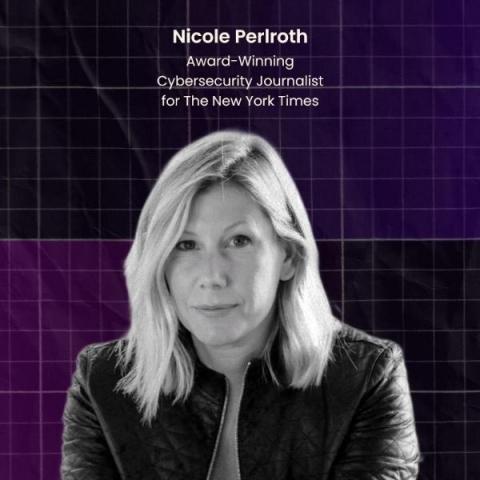
What to Prioritize in Your Fight Against Rising Cybersecurity Threats

At our recent Data Security Summit, Bipul Sinha sat down with author and award-winning The New York Times cybersecurity journalist Nicole Perlroth to discuss learnings from her research and thousands of interviews with security leaders, government officials, hackers, spies, and more.

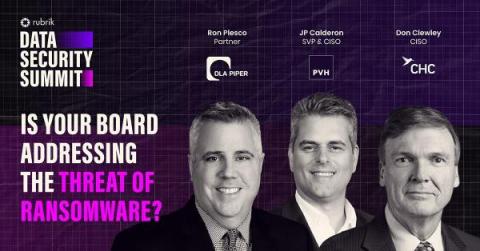
Is Your Board Adequately Addressing the Threat of Ransomware?

The real risk of business disruption, brand damage, and potential liabilities caused by ransomware attacks has elevated cybersecurity from a technical or operational issue normally handled by security teams, to a major Board level priority and discussion. Even the most sophisticated and mature organizations that once believed their cybersecurity defenses were robust are now rethinking their preparedness and response capabilities required to address the imminent threat of ransomware attacks.

How to Make Slack HIPAA Compliant in 2022

As digital transformation continues post-COVID more organizations, including those covered by HIPAA, will seek out SaaS solutions that make collaboration easier. Fortunately more and more applications like Slack are enabling HIPAA compliant use. In early 2019 as Slack filed for its IPO, the company also updated its security page to provide details on its qualifications as a HIPAA compliant messaging app.

5 Data Loss Prevention Best Practices & Strategies

Data loss prevention (DLP) refers to a category of tools and technologies that classify, detect, and protect information (data) in three states: data in use, data at rest, and data in motion. The purpose of DLP is to enforce corporate data security policies that govern where data does — and doesn’t — belong. As such, there are some key strategies and best practices required to build these data security policies.

6 Cloud Data Loss Prevention Best Practices & Strategies

Data loss prevention (DLP) refers to a category of tools and technologies that classify, detect, and protect information (data) in three states: data in use, data at rest, and data in motion. The purpose of DLP is to enforce corporate data security policies that govern where data does — and doesn’t — belong.

PCI Data Discovery Tools: Keeping Sensitive Data Protected Within Your Organization

The rules set forth by PCI-DSS can seem complicated. Four levels, 12 requirements, multiple credit card brands: it’s easy to get lost in the details of PCI-DSS requirements. However, merchants who fail to meet the PCI compliance standard face heavy consequences. Not only do these companies put their customer data at risk, they also may face hefty fines that can range from $5,000 to $100,000 per month.

Redacting Sensitive Data in 4 Lines of Code

In this tutorial, we’ll demonstrate how easy it is to redact sensitive data and give you a more in-depth look at various redaction techniques, how Nightfall works, and touch upon use cases for redaction techniques. Before we get started, let’s set our Nightfall API key as an environment variable and install our dependencies for our code samples in Python.

The Microsoft Power Apps Portal Data Leak Revisited: Are You Safe Now?

In late August 2021, a major data leak exposed where 38 million private records through Microsoft’s Power Apps portals, a powerful low-code tool that enables both professional and citizen developers to create external-facing applications. The misconfiguration was discovered by the research team at UpGuard and is now well-known as one of the most severe low-code security incidents to date.

Introducing Nightfall for Jira, with Real-Time Data Loss Prevention

We’re excited to announce that Nightfall DLP for Jira now has real-time detection. Services like Jira, which are part of the Atlassian ecosystem, are among some of the most popular cloud tools leveraged by companies today. Like most SaaS applications, Jira is an always-on service where many collaborators share information. In some cases, this may result in the unintentional exposure of sensitive data.

Debunking the Myths about Air Gaps

The air gap, a cybersecurity countermeasure that isolates digital assets to put them out of reach of malicious actors, is the subject of many industry myths. Are you confused by all the myths around air gaps? Does it seem odd that logical air gaps are not considered air gaps in spite of their ability to defend against attacks? If you answered “yes” to these questions, you're likely not alone.

Why you need a layered security approach for protecting your data in today's threat landscape

Data is the lifeblood of any organization, and thanks to digital transformation, data can be shared easily among many users within and across organizations. Organizations store as well as transmit large amounts of sensitive data and information. As more and more data exchange happens, risks and threats also increase. The average cost of a data breach was $ 3.86 million and surprisingly the average time to identify and contain a breach was a staggering 280 days.

The Secure Data Layer: A Formidable Opponent Against Ransomware

When organizations are attacked by ransomware, only a little more than half are able to recover their data using a backup. This begs the question, “What about the rest? Why might they be unable to recover?” One reason may be that their backup data has been compromised. Backups are a hot target for hackers. If they can get to an organization’s backup data, they have far more leverage.

Something, Something, Hackathon: Rubrik Announces 6th Annual Hackathon Winners

Hackathons vary in sizes and shapes, but ours has typically been a 24-hour sprint, with teams submitting a five-minute video presenting their project. This year was our biggest hackathon yet, with almost 90 teams registering across a multitude of departments including Support, Sales, Product, Technical Writing, and, of course, Engineering! We crowdsource the first-round judging by asking anyone at Rubrik to participate in evaluating projects.

NC Protect for Microsoft Teams

NC Protect offers a simpler, faster and scalable way to ensure secure collaboration in Teams. NC Protect dynamically adjusts access to and protection of chats, channels and files shared in Teams based on user and file attributes to control what users can see, how they can share information and with whom. Get granular security with less time and effort.

Scanning Amazon S3 Buckets with Nightfall Data Loss Prevention (DLP)

In this tutorial, we will walk through the end-to-end process of scanning your Amazon S3 buckets for sensitive data with Nightfall’s S3 Sensitive Data Scanner. By the end of this tutorial, you will have an exported spreadsheet report (CSV) of the sensitive data in your S3 buckets.

A Definitive List of Different Cloud Compliance Standards

Cloud security is not only good for consumers — but it’s also a requirement for businesses in many industries. Understanding compliance regulations (like GDPR) and security frameworks (like NIST) can help IT teams create strong, layered privacy and security controls and data loss prevention using a range of platforms and integrations. Here are the most common and comprehensive security standards that businesses need to know to be cloud compliant.

Discover and classify sensitive data in Amazon S3 with Nightfall's DLP Scanner

Organizations store high volumes of business-critical information in Amazon S3, such as personally identifiable information (PII), credit card information, secrets & credentials, and more. Identifying and protecting sensitive data in Amazon S3 is increasingly time-consuming, complex, and expensive, especially as your organization takes on more data.

Operationalizing Data Resiliency

Oracle databases are an integral part of modern technological infrastructure for organizations globally. They underpin high-volume digital business, perform thousands of transactions, and house an organization’s critical and sensitive information. Today’s business requirements and data-driven applications are expanding the definition of “data loss” to include data that is inaccessible to the business for a period to significantly and negatively impact it.

Bring down data storage costs by getting rid of obsolete data [Savings estimator]

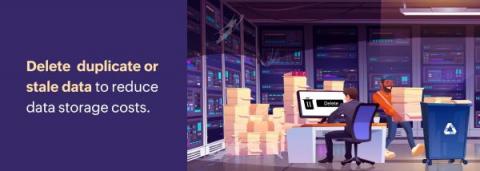
Redundant, obsolete, and trivial (ROT) data refers to information housed in data repositories that is either not in use or not needed in current business operations. These are files just lying around in your data stores, adding to data storage costs.

SharePoint and Office 365 compliance & data classification with cp.Discover

Discover, Classify, and Protect your most Sensitive data. Find critical data in local and remote file shares such as Microsoft SharePoint, Office 365, AWS or Azure and create custom sensitive data rules to locate and classify intellectual property and other sensitive data specific to your business.

3 must-dos for IT admins in healthcare organizations to secure patients' data and privacy

Since the beginning of the pandemic, there has been an increase in the volume of sensitive patient data being stored and processed by healthcare organizations. A patient’s health history, including all the treatments, procedures, prescriptions, lab tests, and scan reports, are stored in the form of electronic health records (EHRs).

8 Best Practices for Data Security in Hybrid Environments

Operating in hybrid environments can get really tricky at times. As more and more organizations are moving their sensitive data to the public cloud, the need to keep this data secure and private has increased significantly over time. While handling their valuable datasets within their respective environments, companies need to ensure utmost data security and compliance to meet the regulations set by various governments.

Secure sensitive files and data in Box with Nightfall's Box DLP Scanner

Storing files safely in the cloud is one of the foundations of remote work. File sharing platforms like Box were popular before the pandemic for their ease of use and collaboration between users anywhere in the world. Now that we’re living and working in a world where remote work is the norm, they’ve become essential pieces of digital infrastructure.

Mitigate Data Loss with Rubrik File-Level Recovery for Microsoft Azure

The SaaS-based Rubrik platform is built to protect and recover a wide variety of cloud-native workloads. For Microsoft Azure, this commonly equates to protecting Azure Virtual Machines and Managed Disks, where recovery options can range from entire resource replacement, in-region or cross-region exports (clones), and now file/folder recovery.

Ransomware Recovery: Langs Building Supplies "We've Been Hacked!"

It was 4:00 in the morning, May 20, 2021. Matthew Day, CIO of Langs Building Supplies (Langs) was excited for a long-anticipated holiday after 14 months of lockdown due to COVID-19. His wife was thrilled. His friends, ecstatic. But the day took an unexpected turn. Instead of waking up delighted to leave for his getaway, Day woke up to every CIO’s worst nightmare, the dreaded phone call: “We’ve been hacked.”

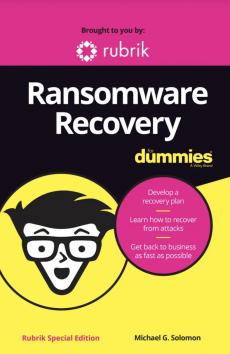
Ransomware Recovery For Dummies

Ransomware Recovery For Dummies introduces a sensible approach to recovering quickly from ransomware attacks that you can't avoid. After exploring the ransomware basics, we'll cover the important role backup solutions play in protecting your data, as well as what features you need to recover from ransomware. By the end of this ebook, you will learn how to build a recovery plan that makes sense and keeps your organization safe. We also include the top ten tips for building the most effective ransomware recovery plan.

The Key to Solving Ransomware, Insiders, and Data Theft

The common theme across ransomware, insider threats, and data theft is the exfiltration of data. While threat research labs usually publish the process steps of ransomware encryption, keys, and disk clean-up, the parts about accessing the data and exfiltration are often left out. Also, one security solution does not solve the problem itself, making partner integrations vital to the success of security solution stacks.

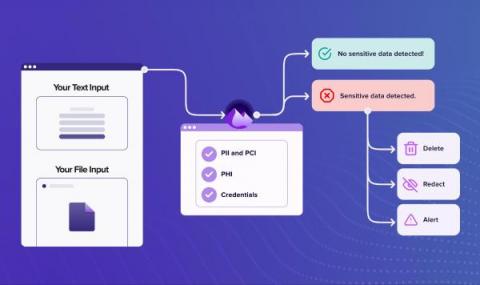
Data Loss Prevention (DLP) APIs - Intro to the Nightfall Developer Platform

The Nightfall Developer Platform is a set of APIs to classify & protect sensitive data, like PII and credentials, to prevent data leaks in your app or service. Nightfall handles the data protection infrastructure so you can focus on building great products.

I Left the Founding Team at Uber Eats to Build the Developer Tool I Always Needed

Data stewardship and protection of customer data is likely to become one of the largest challenges for businesses this decade, with a growing number of countries considering data privacy legislation. For example, in 2020, 30 states within the US considered data privacy bills; that number increased to 38 in 2021. This wave of legislation, kicked off by GDPR, started around 2016 when the world entered the Zettabyte era.

Announcing the Nightfall Developer Platform - APIs for Building Data Protection into Any Application

Nightfall’s vision is to power data protection in every app or service. Our native SaaS integrations for apps like Slack, GitHub, and Google Drive already protect organizations, ranging from small startups to the Fortune 100, against data leaks with our machine learning-powered detection engine. Today, we’re excited to announce the launch of the Nightfall Developer Platform, so you can build data discovery, classification, and protection using our powerful APIs.

4 Components of Modern Data Classification & Protection Infrastructure

Data privacy is top of mind for every organization, with individuals wanting reassurance that their data is secure at all times. With the ever increasing number of cloud applications on the market today, security teams are faced with the challenge of keeping track of compounding volumes of sensitive data that can flow internally, externally, and across systems.