Mailchimp
Not subscribed to OpsMatters Newsletter


When scanning your code with our secure coding tool, Snyk Code might find all kinds of security vulnerabilities. And while Snyk Code is fast, accurate, and rich in content, sometimes there is the need to suppress specific warnings. Typical example use cases arise in test code when you explicitly use hard coded passwords to test your routines, or you know about an issue but decide not to fix it.
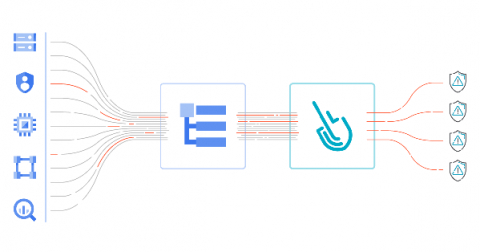
GCP audit logs are a powerful tool that track everything happening in your cloud infrastructure. By analyzing them, you can detect and react to threats. Modern cloud applications are not just virtual machines, containers, binaries, and data. When you migrated to the cloud, you accelerated the development of your apps and increased operational efficiency. But you also started using new assets in the cloud that need securing.
Lateral movement is a growing concern with cloud security. That is, once a piece of your cloud infrastructure is compromised, how far can an attacker reach? What often happens in famous attacks to Cloud environments is a vulnerable application that is publicly available can serve as an entry point. From there, attackers can try to move inside the cloud environment, trying to exfiltrate sensitive data or use the account for their own purpose, like crypto mining.
Implementing the AWS Foundations CIS Benchmarks will help you improve your cloud security posture in your AWS infrastructure. What entry points can attackers use to compromise your cloud infrastructure? Do all your users have multi-factor authentication setup? Are they using it? Are you providing more permissions that needed? Those are some questions this benchmark will help you answer. Keep reading for an overview on AWS CIS Benchmarks and tips to implement it.
Implementing effective threat detection for AWS requires visibility into all of your cloud services and containers. An application is composed of a number of elements: hosts, virtual machines, containers, clusters, stored information, and input/output data streams. When you add configuration and user management to the mix, it’s clear that there is a lot to secure!
On March 2, Microsoft released patches to address four zero-day vulnerabilities in Microsoft Exchange Server software. Those vulnerabilities, known collectively as ProxyLogon, affect on-premises Exchange Server 2013, Exchange Server 2016, and Exchange Server 2019. (Exchange Online, which is part of Microsoft 365, has not been affected.)
The past 12 months have been especially challenging for the manufacturing industry. The pandemic affected in-person manufacturing jobs as well as supply and demand, causing many manufacturing companies to shut their doors or lay off valuable employees. Recognizing the vulnerable state of manufacturing companies, cybercriminals saw manufacturing as an easy target. In fact, the manufacturing industry saw an 11 percent increase in cyberattacks in 2020.
Table of Contents:
00:00 - Introduction
00:19 - Default Activeboard
00:31 - Set as default
01:06 - Unset as default
01:15 - Favorite Activeboards
01:34 - Filter favorites
02:08 - Remove favorites
For more videos on Activeboards: https://www.youtube.com/playlist
Organizations are increasingly introducing new Internet of Things (IoT) devices into their environments. According to Statista, the aggregate number of IoT devices deployed by organizations globally increased from 7.74 billion in 2019 to around 8.74 billion a year later. The market and consumer data firm reported that the next few years will see growth in all types of IoT devices, including Industrial Internet of Things (IIoT) offerings like smart monitors.