Mailchimp
Not subscribed to OpsMatters Newsletter


Australia recently confirmed that a series of mobile phishing attacks were successfully executed on senior officials. According to The Sydney Morning Herald, the targets – which included Australia’s finance minister, health minister and ambassador to the U.S. – were sent messages asking them to validate new WhatsApp or Telegram accounts.
The White House is reportedly moving swiftly forward with a plan to harden the security of the US power grid against hacking attacks. According to Bloomberg, the Biden administration has a plan to dramatically improve how power utilities defend themselves against attacks from countries considered to be adversaries in cyberspace – such as Russia, Iran, North Korea, and China.
As expected, the start of 2021 has seen unprecedented movement in the U.S. with 22 states introducing comprehensive privacy legislation and even more introducing specific-use legislation. To date, hundreds of privacy bills were introduced across the states; to give some perspective, more than 50 privacy bills were introduced in New York alone. Undoubtedly a hot topic, it seemed anyone with an idea for a privacy bill put it in writing and introduced it to their legislature.
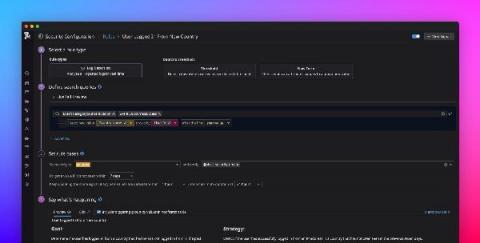
When it comes to securing your production environment, it’s essential that your security teams are able to detect any suspicious activity before it becomes a more serious threat. While detecting clear-cut attacker techniques is essential, being able to spot unknowns is vital for full security coverage.
Phishing exercises are an important tool towards promoting security awareness in an organization. Phishing is effective, simply because it works. However, any social engineer can devise a marvelously deceptive message with an irresistible link that only the most tech-savvy person would spot as a phishing test. Sometimes, the phish can be sent at a time of day that catches the recipient off-guard, which causes a person to click the malicious link.
It’s that time of year again: WhiteSource’s annual State of Open Source Security Vulnerabilities for 2021 is here. Once again, when 2020 came to a close, our research team took a deep dive into the WhiteSource database to learn what’s new and what stayed the same in the ever-evolving world of open source security.
As Uncle Ben once said, “With great power comes great responsibility.” This is also true of the Kubernetes API. It is very powerful, and you can build amazing things on top of it, but it comes with a price—a malicious user can also use the API to do bad things. Enter Kubernetes RBAC (role based access control), which enables you to use the API in a controlled manner by granting only required privileges needed, following least privilege principle.