Mailchimp
Not subscribed to OpsMatters Newsletter


Healthcare organizations still seem to think that blocking all access to unapproved cloud storage or cloud collaboration tools means that they’re preventing leakage of sensitive information. But as the old saying goes, “Data flows like water.” Eventually, it’s going to find the holes and escape. Even if a healthcare IT system has water-tight data controls, that’s not the only goal within the organization—and not even the most important one.
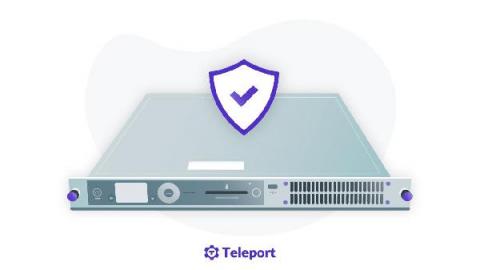
HSM stands for hardware security module. HSMs are hardware devices. They can be quite small and plugged into the main board of a computer, or they sit side by side in a server rack. They store sensitive data such as private keys. HSMs do not allow you to read that sensitive data back; instead, they expose only cryptographic operations like signing of certificates or encrypting data. This provides stronger protections for storing private keys compared to disks or databases.
I’m excited to announce that Lookout has extended its partnership with Microsoft to ensure our threat telemetry data is easily accessible via the Microsoft Azure Sentinel Security Information and Event Management (SIEM) solution. With this integration, Azure Sentinel users can leverage a rich mobile dataset within the Lookout Security Graph. When it comes to increasing productivity, we want to work smarter.
Organizations are under tremendous pressure to deliver innovative products and stick to tight release timelines. To keep up with the rapid release schedule, engineering teams are adopting the DevOps model for its increased efficiency and agility. It has changed the way that development teams think. As a result, continuously improving performance and delivering releases faster have become standard.
It has been a while since I have been excited to write about encrypted tunnels. It might be the sheer pain of troubleshooting old technologies, or countless hours of falling down the rabbit hole of a project’s source code, that always motivated me to pursue a better alternative (without much luck). However, I believe luck is finally on my side.
According to FBI Director, Christopher Wray, when it comes to ransomware disruption and prevention, “...there’s a shared responsibility, not just across government agencies but across the private sector and even the average American.” At Elastic, we’re here to help state and local governments. Ransomware attacks cost the U.S. government more than $18.9 billion in 2020 alone.
On the countdown to a new release, every second counts to snap up those limited-edition new kicks or sought-after concert tickets. Online attackers know that when deploying bots to gain a competitive advantage, without masking their activity it’s a matter of time before their activity is blocked by the target eCommerce platform. Industries are becoming more and more alert to bots and their ever-increasing sophistication.