Mailchimp
Not subscribed to OpsMatters Newsletter


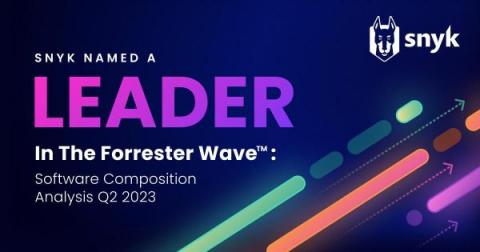
We’re thrilled to announce that Snyk was named a Leader in The Forrester Wave™: Software Composition Analysis (SCA), Q2 2023 report! We believe this recognition — and the fact that we are ranked highest in the Strategy category out of all evaluated vendors — highlights the work we’ve done at Snyk to disrupt the industry with developer-centric application security solutions to help companies secure their software supply chain.
The Pearland Independent School District spans over 23 separate campuses in the Pearland, Texas area. The district teaches over 21,000 students and employs as many as 1,771 individuals. The large district generates approximately $144 million in revenue annually and handles data for tens of thousands of students, parents, and employees.
In today's digital world, login credentials are the keys to the kingdom. Whether it's your online banking, your social media accounts, or your work accounts, your login credentials are essential for accessing your personal information. Unfortunately, cybercriminals are always looking for ways to obtain these credentials, and their techniques are becoming increasingly sophisticated.
The content of this post is solely the responsibility of the author. AT&T does not adopt or endorse any of the views, positions, or information provided by the author in this article. OpenAI's flagship product, ChatGPT, has dominated the news cycle since its unveiling in November 2022. In only a few months, ChatGPT became the fastest-growing consumer app in internet history, reaching 100 million users as 2023 began.
This article helps you understand what a QR code is, how it works, the different types of QR codes, the rise in its usage, the risks involved, the advantages and disadvantages, and whether it is safe.
Microsoft describes a sophisticated phishing campaign that targeted several financial organizations. “Microsoft Defender Experts uncovered a multi-stage adversary-in-the-middle (AiTM) phishing and business email compromise (BEC) attack against banking and financial services organizations,” the researchers write. “The attack originated from a compromised trusted vendor and transitioned into a series of AiTM attacks and follow-on BEC activity spanning multiple organizations.
As government-sponsored and widespread vulnerability attacks continue to result in larger damages, cyber insurers are looking for opportunities to still meet demand without incurring risk. It may come as a surprise, but cyber insurers aren’t in the business of issuing (and covering) cyber insurance policies; they’re in the business of staying in business. And that means identifying and reducing the highest sources of risk where the insurer will lose through paying on claims.
Ransomware attacks are as pervasive as ever, with new data demonstrating just how impactful the attacks really are. If you’re one of the lucky few organizations that hasn’t fallen victim to a ransomware attack, consider yourself lucky. According to the 2023 Ransomware Trends Report from backup vendor Veeam, the vast majority of organizations (85%) have experienced a ransomware attack. And while that number is pretty shocking, that’s not the worst of it.
Despite the race to integrate artificial intelligence (AI) and machine learning (ML) into business systems and processes, the crucial issue of comprehending and articulating the decision-making process of these models is often ignored. Although machine learning is a valuable tool for uncovering pertinent information from vast amounts of data, it is essential to ensure the relevance, accuracy and reliability of this information.