Welcome to the third DDoS threat report of 2023. DDoS attacks, or distributed denial-of-service attacks, are a type of cyber attack that aims to disrupt websites (and other types of Internet properties) to make them unavailable for legitimate users by overwhelming them with more traffic than they can handle — similar to a driver stuck in a traffic jam on the way to the grocery store.
It's been two years since we announced Email Routing, our solution to create custom email addresses for your domains and route incoming emails to your preferred mailbox. Since then, the team has worked hard to evolve the product and add more powerful features to meet our users' expectations. Examples include Route to Workers, which allows you to process your Emails programmatically using Workers scripts, Public APIs, Audit Logs, or DMARC Management.
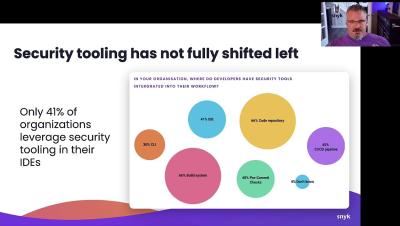
Everyone is talking about generative artificial intelligence (GenAI) and a massive wave of developers already incorporate this life-changing technology in their work. However, GenAI coding assistants should only ever be used in tandem with AI security tools. Let's take a look at why this is and what we're seeing in the data. Thanks to AI assistance, developers are building faster than ever.
Right now, organisations using AI cybersecurity tools like SenseOn can improve their cybersecurity in three core ways: But, in the future, one of the most significant benefits of AI will be its ability to protect organisations from….AI. To see why, let’s jump into a time machine.
As organizations continue to believe the malicious use of artificial intelligence (AI) will outpace its defensive use, new data focused on the future of AI in cyber attacks and defenses should leave you very worried. It all started with the proposed misuse of ChatGPT to write better emails and has (currently) evolved into purpose-built generative AI tools to build malicious emails. Or worse, to create anything an attacker would need using a simple prompt.
Ahead of the upcoming AI Safety Summit to be held at the UK’s famous Bletchley Park in November, I wanted to outline three areas that I would like to see the summit address, to help simplify the complex AI regulatory landscape. When we start any conversation about the risks and potential use cases for an artificial intelligence (AI) or machine learning (ML) technology, we must be able to answer three key questions.