Security | Threat Detection | Cyberattacks | DevSecOps | Compliance

Mastering Identity and Access Management Policies: A Comprehensive Guide

How can your business develop and maintain identity and access management policies that safeguard your digital assets while providing appropriate access levels? In this guide, we explore the key elements of IAM policies, their critical role in organisational security, and offer actionable insights for crafting policies that align with both business needs and regulatory demands.

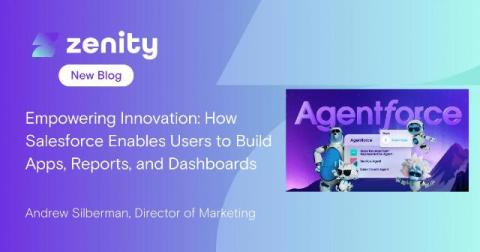
Advanced Threat Protection for Apps Built Using AI

AI has undoubtedly revolutionized various industries, enhancing both efficiency and innovation through low-code and no-code platforms. Yet, this ease of development brings with it an increased burden of security. As business users and developers rapidly build applications, automations, and bots using AI, the complexity and volume of these creations amplify potential security vulnerabilities.

How Are SMEs Approaching AI?

Have you heard about AI yet? Just kidding. We know you have. Recently, AI’s popularity has skyrocketed among businesses and consumers alike. This surge was driven by a combination of technological advancements (e.g., machine learning, natural language processing, and data analytics) with an increase in tool accessibility and user-friendliness.

JumpCloud and Google: Even Better Together

It’s been just over a year since JumpCloud and Google announced a strategic partnership to seamlessly manage your Google Workspace identities, the access they need, from any device leveraging one platform. You may be wondering what’s new, how it’s going for our customers and partners, and what benefits they’re getting from the joint solution? This article provides a condensed set of resources that make it simpler to get started with a demo or simulations.

Simplify SOC analyst experience with the enhanced Corelight Splunk App

Security operations centers (SOCs) play a vital role in detection, containment and mitigation of today’s advanced cyber attacks. SoC teams are also responsible for proactively hunting for threats, and improving the organization’s overall security posture. Modern SOC analysts struggle with alert fatigue.

Opti9's AWS Disaster Recovery: Your Path to Unmatched Cloud Resilience

Businesses today rely heavily on the cloud infrastructure provided by Amazon Web Services (AWS) to drive innovation, enhance scalability, and streamline operations. However, with this reliance comes the imperative need to safeguard against potential disruptions that compromise business continuity and an organization’s reputation. This is where Disaster Recovery (DR) steps in as a critical component of any organization’s AWS strategy.

Understanding Privilege Access Management: A Comprehensive Guide

Why is Privilege Access Management the linchpin of your cybersecurity strategy? Our guide delivers compelling insights into PAM—what it is, why it matters, and how the right privilege access management tactics fortify your defences against data breaches and compliance violations while securing sensitive data and critical systems.

Combating the DDoS IoT Threat: Strategies to Protect Your Connected Devices

In the realm of IoT, DDoS attacks are not just a threat but a harsh reality. This article cuts through the complexity of DDoS IoT threats, offering a clear understanding of how IoT devices are hijacked for DDoS attacks and presenting actionable strategies to protect these devices. From recognising vulnerabilities to implementing robust defences, we provide the insights you need to secure your network against the dire consequences of DDoS attacks.

Understanding Broken Function Level Authorization

Application Programming Interfaces (APIs) allow your applications to talk to one another, like an application-to-application iMessage or Signal. If you’ve ever texted a message to the wrong group chat, you’ve created a situation that mimics what broken function level authentication does between users and applications.

The Evolution of Cyber Threats in the Age of AI: Challenges and Responses

Cybersecurity has become a battlefield where defenders and attackers engage in a constant struggle, mirroring the dynamics of traditional warfare. In this modern cyber conflict, the emergence of artificial intelligence (AI) has revolutionized the capabilities of traditionally asymmetric cyber attackers and threats, enabling them to pose challenges akin to those posed by near-peer adversaries.