Security | Threat Detection | Cyberattacks | DevSecOps | Compliance

Benefits of Using Hardware Security Keys on iOS

Some benefits of using hardware security keys on iOS include protection against various cyber attacks, a smoother login experience and increased privacy. Since all mobile Apple devices use iOS, protecting them with Multi-Factor Authentication (MFA), such as hardware security keys, is important because requiring another way to verify your identity adds another layer of security.
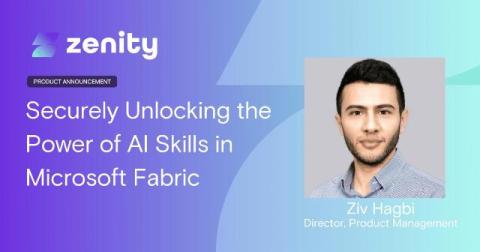
Securely Unlocking the Power of AI Skills in Microsoft Fabric

In today’s rapidly evolving digital landscape, the ability to harness the power of AI is becoming increasingly crucial for businesses. Within Microsoft Fabric, Microsoft recently added capabilities for building AI Skills, making it easier than ever for business users to create and integrate intelligent capabilities into your workflows to answer questions over lakehouse and warehouse tables. AI Skills are basically LLM engines that simplify interactions with data.

Mock Data for Testing: A Critical Component for Software and AI Development

Mock data is an essential tool in software development and testing, offering realistic and secure alternatives to sensitive production data. Beyond traditional testing, mock data is now a cornerstone for AI development, where large datasets are critical for training and validation. By mimicking the properties of real-world data while ensuring privacy and compliance, mock data enables organizations to innovate without compromising security or trust.

The Startup's Open-Source Guide to Application Security

Security can be a difficult, expensive world to navigate. So we decided to create a comprehensive guide of open-source security tools to cut through the bullsh*t and show what the most critical tools to implement are, what assets you need to protect, and how you can build a long-term security plan using only free and open-source tools.

API Security Insights: The Architect's Perspective #APIArchitect #ProactiveSecurity #TechInsights

API architects play a critical role in building secure systems by applying proactive controls to prevent vulnerabilities. Their approach focuses on designing APIs with security as a foundation, ensuring stronger protection for every system.

Top Open Source API Security Tools

The modern world relies on Application Programming Interfaces (APIs). They allow applications to communicate with each other, servers, and consumers to facilitate data sharing and simplify application development. Without them, the internet would be unrecognizable. However, APIs also present a considerable risk to organizations. If left unsecured, they can be a gateway for attackers to access critical data and services. Protecting APIs is extraordinarily important, but it can be expensive.

Grinch Bots strike again: defending your holidays from cyber threats

Back in 2021, we covered the antics of Grinch Bots and how the combination of proposed regulation and technology could prevent these malicious programs from stealing holiday cheer. Fast-forward to 2024 — the Stop Grinch Bots Act of 2021 has not passed, and bots are more active and powerful than ever, leaving businesses to fend off increasingly sophisticated attacks on their own.

How Schools Can Stop Cyberbullying and Keep Students Safe Online

Cyberbullying is a big issue in today's schools. With students spending more time online for learning and socializing, the chance of harmful behavior like serious harassment increases. Schools need to make sure their digital platforms are safe for everyone. Stopping cyberbullying not only involves punishing bad behavior but also teaching students, setting clear rules, and using technology wisely. Here are some simple and practical ways schools can take action to protect students and make the internet a safer space.

How AI Is Transforming Cybersecurity with Predictive Capabilities

Unless you've been avoiding the internet entirely, you've probably noticed the rise of sophisticated cyberattacks making headlines. From data breaches to ransomware, these threats aren't just increasing in number - they're becoming more complex and harder to detect. Enter artificial intelligence (AI), the unsung hero quietly reshaping cybersecurity. But how exactly does AI use its predictive superpowers to stay ahead of hackers? Let's dive in.