Security | Threat Detection | Cyberattacks | DevSecOps | Compliance

The Myth of Self-Healing Code: Why Claude Code Security Isn't Replacing Application Security

Anthropic recently launched Claude Code Security, an AI-powered vulnerability scanner that can analyze your codebase, trace data flows across files, find bugs, and even propose patches. It represents a meaningful advance in how developers can get security insights earlier in the development process. But let’s be clear: this is not a replacement for a comprehensive application security program.

Cursor Composer 1.5 is Here: Is It Actually Better?

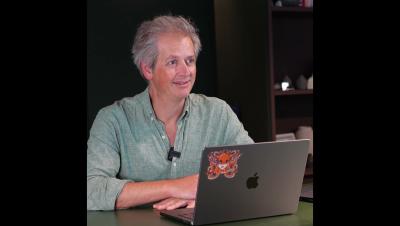
Is Cursor’s new Composer 1.5 model a major leap forward, or just a marginal update? Today, we’re putting the latest version of Cursor’s agentic AI to the test using our "Production-Ready Note App" prompt. We compare the speed, UI design, and agentic capabilities of 1.5 against version 1.0. Most importantly, we run a full security audit using the Snyk extension to see if the AI-generated code is actually safe for production.

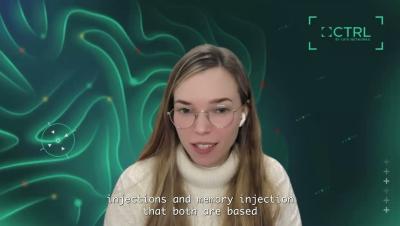
Webinar Stop Trusting Your AI Browser

Browser security is built around human control. AI browsers break that model. By inserting an assistant that can interpret content and act inside authenticated sessions, behaviors can be manipulated beyond what traditional defenses can detect. Security leaders need to catch this Cato CTRL Cybersecurity Masterclass to see how attackers exploit AI Browser behavior, and what defenders can do to respond.

Cloudflare One is the first SASE offering modern post-quantum encryption across the full platform

During Security Week 2025, we launched the industry’s first cloud-native post-quantum Secure Web Gateway (SWG) and Zero Trust solution, a major step towards securing enterprise network traffic sent from end user devices to public and private networks. But this is only part of the equation. To truly secure the future of enterprise networking, you need a complete Secure Access Service Edge (SASE).

Intel Chat: DoppelBrand, Android malware Keenadu, attackers expand AI use & AI-driven threats [295]

In this episode of The Cybersecurity Defenders Podcast, we discuss some intel being shared in the LimaCharlie community. Support our show by sharing your favorite episodes with a friend, subscribe, give us a rating or leave a comment on your podcast platform. This podcast is brought to you by LimaCharlie, maker of the SecOps Cloud Platform, infrastructure for SecOps where everything is built API first. Scale with confidence as your business grows.

Claude Code Summarizes Host Activity in LimaCharlie

Watch Claude Code analyze a week of activity for a specific host in LimaCharlie. The agent resolves the correct sensor, queries recent detections, collects event telemetry, analyzes process and network behavior, and produces a concise activity profile. Security analysts can quickly understand host behavior patterns without manually reviewing raw telemetry logs.

Claude Code Security: A Welcome Evolution in the Remediation Loop

AI accelerates discovery — but enterprise trust still depends on deterministic validation, remediation automation, and governance at scale. Last Friday, Anthropic launched Claude Code Security, powered by Opus 4.6, inside Claude Code. The demo is impressive: Frontier AI reasoning scanned open source codebases and surfaced over 500 previously unknown high-severity vulnerabilities — including subtle heap buffer overflows that had survived decades of expert review and fuzzing.

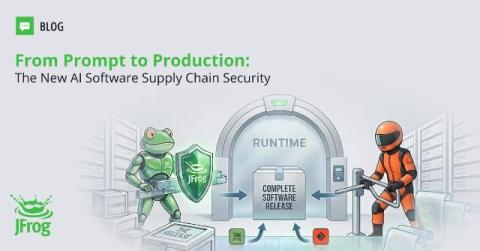
From Prompt to Production: The New AI Software Supply Chain Security

Listen to a NotebookLM podcast version of the blog: When Anthropic announced Claude Code’s new security scanning capabilities, following the announcement of OpenAI’s Aardvark, it marked an important moment for the industry. For the first time, expert-level security review is becoming embedded directly into the act of writing code. Subtle, context-dependent vulnerabilities can now be flagged as they are created. Zero-days can potentially be remediated before they ever make it into a build.

Why Your SOC is Blind to Your Biggest Attack Surface (And How to Fix It)

In many organizations, there is a dangerous unspoken rule: The SOC handles endpoints and networks; Engineering handles APIs. This silo creates a massive blind spot. We recently spoke with the Senior Manager of Security Engineering at a major insurance provider, who described this exact pain point.