In some ways, the cloud has made security management easier, as many cloud providers have taken the responsibilities traditionally associated with local server management out of your hands. But in other ways, the security management conversation has become more confusing for decision makers, as “cloud” is a very broadly defined term and could speak to a variety of different technology ecosystems with their own security considerations.
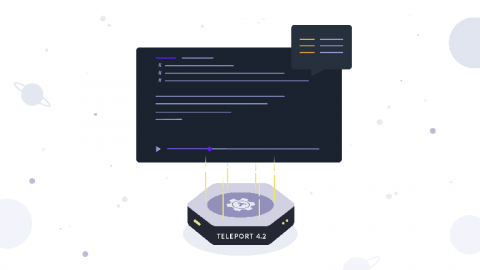
Teleport 4.2 delivers a strong foundation of new features. We have a full list of improvements and fixes attached to our Teleport 4.2.0 GitHub release. Below are a couple of the highlights. Teleport now provides greater visibility into what’s happening during a Teleport session with our Enhanced Session Recording. We’ve also laid the groundwork for a world of possibilities with our enterprise-only Role Escalation via a Workflows API.
When mainstream cloud computing first began to appear on the horizon, (Amazon launched its Elastic Compute Cloud product in 2006.) many organizations were initially hesitant to entrust their most valuable data and processes to a technological innovation named after something that appears so delicate. Oh, how times have changed.
This month Devo exhibited at the AWS re:Invent conference in Las Vegas. I asked a few Devo colleagues who attended the show for their insights about what they heard and saw. Among the many visitors to the Devo booth there were a lot of similar questions about log management and related topics. “There were many log vendors at the show, so people wanted to hear what makes Devo unique,” said Seema Sheth-Voss, vice president, product marketing, for Devo.
Businesses are always looking for ways to control and reduce the cost of doing business as well as gain a competitive advantage over their respective competitors. The constant pressure of doing more with less has introduced many offerings designed to reduce the cost and complexity of the IT/OT infrastructures that support the business. Let’s take a look at some offerings that have been introduced to address these challenges.
According to a 2019 Cyber Security Report published by the International Information System Security Certification Consortium, 93 percent of organizations say they are concerned about cloud security and 28 percent admit to having experienced cloud security incidents during the past year.
Consider how many times a day you check your mobile phone, smartwatch, smart TV, and/or other connected devices. How normal does it seem to be reaching out to an external source, not actually sure where this information is stored, or even coming from, but that it’s there, accessible and ready to be taken in? Organizations wishing to migrate to a third-party cloud solution (‘the cloud’) need to understand this point well.
In this, the final post in my series on considerations for managing your security with cloud services, we will be looking at Infrastructure as a Service (IaaS). If you haven’t yet read the previous blog entries about SaaS and PaaS, it’s worth going back to read these first, as much of the thinking associated with these services is also true for IaaS.