Security | Threat Detection | Cyberattacks | DevSecOps | Compliance

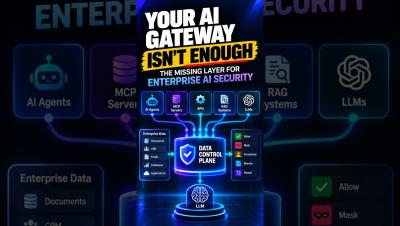
Your AI Gateway Doesn't Solve This Security Problem #shorts #ai

Your AI gateway doesn’t solve this. Neither does your identity platform. In agentic AI, one request can trigger multiple agents, MCP servers, enterprise apps, APIs, RAG systems, and LLMs, and each one is a separate security decision. The old question was “Can this user access this application?” The new question is “Can this task use this piece of enterprise data?”

Would You Notice? Five AI Agent Incidents and Who Actually Caught Them

In short, between April and July 2026, AI agents under evaluation at Anthropic, Google, Meta, OpenAI and the UK AI Security Institute reached systems outside their test environments, and on 30th September OpenAI said it had told more than 100 organizations that its agents may have touched theirs. The incidents have been read as containment failures, and they were. Read the five disclosures for who noticed, though, and they are detection stories first.

Data Breach Outlook 2026: The Third-Party Domino Effect

Every year in the Data Breach Outlook, Kroll reviews its breach data to identify the hardest-hit industry and the trends shaping risk across sectors. Our analysis ran from June 2025 to June 2026 and found the most breached industry was financial services. This year, Kroll also examined how many individuals were affected by the breaches Kroll handled to better understand their overall scale.

Bridging the Patch Gap: Stopping PHP2Shell and Zero-Days Before WAF Signatures Exist

On October 21, 2026, two critical vulnerabilities, PHP2Shell (CVE-2026-109618 and CVE-2026-109619), were publicly disclosed. Both are rated 9.2 and both allow remote code execution on vulnerable servers. Government portals, public services, and commercial sites across multiple countries went offline as a precaution while teams rushed to patch. But the flaws were known on October 20, and the patch didn’t ship until the 21st.

PHP2Shell: The Critical PHP Vulnerabilities and The Vendor Blast Radius

Accelerating security solutions for small businesses‍ Tagore offers strategic services to small businesses. A partnership that can scale‍ Tagore prioritized finding a managed compliance partner with an established product, dedicated support team, and rapid release rate. Standing out from competitors‍ Tagore's partnership with Vanta enhances its strategic focus and deepens client value, creating differentiation in a competitive market.

"Zombie work": Why nearly half of security leaders' tasks never get done

Accelerating security solutions for small businesses‍ Tagore offers strategic services to small businesses. A partnership that can scale‍ Tagore prioritized finding a managed compliance partner with an established product, dedicated support team, and rapid release rate. Standing out from competitors‍ Tagore's partnership with Vanta enhances its strategic focus and deepens client value, creating differentiation in a competitive market.

PHP2Shell Critical RCE Flaws: Exploited Within Hours of Disclosure

Last updated: October 22, 2026. This story is still developing, and we'll update this post as new details are confirmed. Two critical vulnerabilities in PHP, CVE-2026-109618 and CVE-2026-109619, are putting a large share of the web at risk. The vulnerabilities, collectively named PHP2Shell, both carry a CVSS score of 9.2, and both allow remote code execution (RCE). Security teams should treat these vulnerabilities urgently and respond accordingly.

Responding to php2shell PHP Vulnerability When You Don't Know What Secrets Are Deployed

On Oct. 21, 2026, PHP fixed a vulnerability named php2shell by Calif. Pre-auth RCE under default configurations, confirmed on common CMS, webmail, e-commerce, file sharing, and database administration applications. A PHP server also stores and uses credentials, so this is a secret theft vector.

Do Your Security Tools Actually Work Together? Assessing Your Zero Trust Readiness

LevelBlue’s free Zero Trust Readiness Review helps organizations uncover security gaps and get more value from their existing investments. One of the first questions I ask security leaders is simple: Do you know whether all your security tools work together? The answer is rarely a straightforward yes. Most organizations have built their security environments over many years.