Security | Threat Detection | Cyberattacks | DevSecOps | Compliance

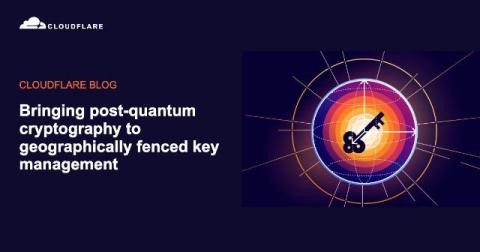
Bringing post-quantum cryptography to geographically fenced key management

Today, Cloudflare is launching a post-quantum geographically restricted key manager in support of our Data Localization Suite (DLS) in closed beta. This new PQ GeoKey Manager is a cornerstone of Cloudflare’s data sovereignty solutions, making sure that a customer's decryption keys are only accessible in their chosen geography. GeoKey Manager implements this by wrapping each decryption key such that it can only be decrypted by Cloudflare servers that are located in the allowed geography.

Warning: Attackers Are Using Calendar Invite Files to Evade Security Filters

Phishing attacks are increasingly using legitimate calendar invites to bypass security filters, according to researchers at Netcraft. Attackers send ICS calendar invite files that plant phishing lures directly on users’ calendars, often under the guise of work-related meetings.

Vibe Coding Has a Security Problem (And How to Fix)

I vibe coded a working app in 10 minutes without writing a single line of code. It ran fine. It also had a hardcoded API key, a database password sitting in a Model Context Protocol (MCP) config file, and an npm package I never checked. In episode one of Secure Vibe Coding, we look at what AI-assisted coding means for secrets security, using data from GitGuardian's State of Secrets Sprawl 2026 report.

Best practices for configuring role-based access control (RBAC) in Tines 3B

Learn how to configure role-based access control (RBAC) in Tines 3B so your teams have the access they need as your organization grows. Jamie Gaynor joins Eoin Magner, a Senior Forward Deployed Engineer at Tines, to walk through practical recommendations for organizing groups, assigning space permissions, and making user access easier to manage. In this video: Whether you’re setting up your tenant or bringing more teams into Tines, start with an access structure you can reuse.

Is "SIEM-less" really what it sounds like?

SIEM-less security may sound like an escape from traditional SIEM complexity and costs, but the underlying capabilities still have to exist somewhere. A SIEM is a multipurpose tool. It brings together cyber and physical security use cases; drives threat detection, investigation, and response (TDIR); serves as a system of record for governance, regulatory, and compliance needs; and supports observability use cases tied to resilience and service degradation. The list goes on.