Security | Threat Detection | Cyberattacks | DevSecOps | Compliance

What Is Managed Detection and Response (MDR)?

Managed Detection and Response (MDR) is a cybersecurity service that provides continuous monitoring, threat detection, investigation, and response across an organization’s environment. It combines advanced detection technology with a 24/7 security operations center (SOC) to identify threats early and take action before they cause damage.

The Agentic MDR Pipeline: Detection Engineering at Scale

A CVE surfaces in the morning. By the time you are talking to that customer, you can tell them: we saw it, we checked your environment, you were not affected, and we deployed a rule that will catch it if it ever shows up. For MSSPs and MDR providers, detection engineering is among the most valuable services you can offer. It is also among the most expensive to deliver consistently and at scale.

Closing the MDR gap for MSPs: Acronis MDR by Acronis TRU available globally

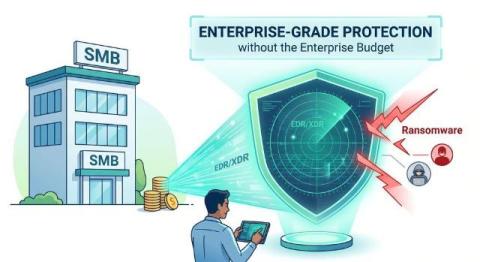
Cybersecurity has entered a new operating reality. Threats are scaling faster, attack chains are becoming more complex and AI is accelerating both their frequency and sophistication. For MSPs, this creates a structural challenge: clients expect enterprise-grade protection, but most service providers don’t have the internal resources to operate a 24/7 SOC at scale. That’s where MDR comes in. But not all MDR services actually solve the problem.

Building a Unified Security Program with LevelBlue MDR

A piecemeal security strategy is a losing one. Simply having a collection of disparate MDR security tools and services isn't enough to protect your organization. The real power lies in seamlessly integrating them into a unified and cohesive defense. LevelBlue understands the value of Managed Detection and Response (MDR), is unlocked when it’s not just a standalone MDR service, but the central nervous system of a comprehensive security ecosystem.

Simplify Compliance with LevelBlue MDR Solutions: A Guide to Managed Detection and Response

There is hardly a government that does not have a long list of acronym-heavy compliance requirements on its books, which can be difficult to meet without the help of a Managed Detection and Response (MDR) solution on your side. This means that whether you operate in healthcare, finance, critical infrastructure, or any sector handling sensitive data, adhering to standards like HIPAA, FedRAMP, DORA, CMMC, GDPR, and others is a legal imperative. And, a good practice.

Managed Detection and Response Solutions: Strengthening Security with LevelBlue MXDR

LevelBlue has developed a suite of managed detection and response solutions to help organizations maintain strong security as threat groups grow more sophisticated. LevelBlue’s Managed Extended Detection and Response (MXDR) with a Co-Managed Security Operations Center (SOC) combines MDR security technology with collaborative expertise to help organizations monitor, investigate, and respond to threats across their environments.

MDR vs. MXDR: Navigating the Landscape of Managed Threat Detection and Response Solutions

As cyber threats continue to escalate in volume and sophistication, organizations increasingly rely on managed security services to detect, monitor, and respond to attacks. Two leading solutions in this space— Managed Detection and Response (MDR) and Managed Extended Detection and Response (MXDR) address these challenges in different ways.

Microsoft Defender vs. MDR: What's Missing?

Microsoft Defender is widely deployed across small and midsize businesses. It is built into the Microsoft ecosystem, familiar to IT teams, and effective at detecting suspicious activity on endpoints. However, detection alone does not stop an attack. As cyber threats evolve, the biggest risk is not missing alerts. It’s failing to investigate and respond to them fast enough. The risk lies in what happens after an alert is generated.

Ask These 9 Questions When Evaluating an MDR Provider

Managed Detection and Response (MDR) providers are indispensable to organizations seeking to bolster their cybersecurity posture, but it’s important to know what questions to ask during the search process. Here are nine essential questions and follow up inquiries to ask when assessing an MDR vendor to ensure the right fit for your organization.