Security | Threat Detection | Cyberattacks | DevSecOps | Compliance

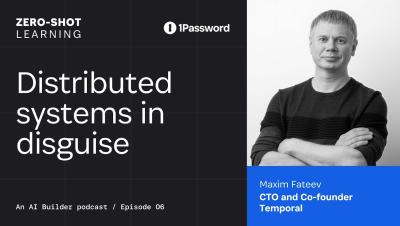
Ep 29: From detection to post-mortem: The complete incident cycle

On this episode of Masters of Data, we break down incident response from detection through containment, forensics, recovery, and postmortem. The foundation? Comprehensive logging. Without it, you're blind. We explore building cross-functional teams and a blame-free culture where people actually report issues. Communication is key: what you tell engineering isn't what you tell executives or customers. AI is accelerating investigations, but the fundamentals still rule: proper tool access, the right people on call, and translating technical chaos into business-speak. The takeaway?

Introducing Aikido Expansion Packs: Safer defaults inside the IDE

Developers work in a few core loops: writing code, committing changes, installing dependencies, and increasingly working alongside AI in the editor. Aikido Expansion Packs are built around those moments. They let you add focused security capabilities to Aikido that run locally, inside your IDE, and fit naturally into how developers already work. Each pack addresses a specific part of the workflow and does not require new tools, new pipelines, or new processes.

The Human-AI Alliance in Security Operations

Picture a SOC analyst starting an investigation. A suspicious spike in authentication activity appears on their dashboard, and they need to understand what’s happening quickly. To do that, they move through a familiar sequence of tools. What begins as a single investigation quickly turns into a chain of context switches: That’s nine steps to investigate one event. This isn’t accidental. Security tools have evolved to solve isolated problems, but together they have created fragmentation.

Apono + SUSE Rancher Prime: Better Together for Secure Kubernetes Access

As organizations increasingly leverage Kubernetes for modern, cloud-native applications, the challenge of managing these environments securely and at scale grows. A centralized platform is needed to simplify Kubernetes operations, enabling deployment, management, and security across cloud, on-prem, and edge locations. Crucially, access to these Kubernetes environments, particularly production clusters, demands stringent control.

A January Snapshot: Real-World AI Usage

AI is no longer a fringe productivity experiment inside organisations, it is embedded, habitual, and increasingly invisible. This snapshot from CultureAI’s January usage data highlights how AI is actually being used across everyday workflows, and where risk is forming as a result. Rather than focusing on hypothetical threats or model-level concerns, the findings below surface behavioural signals from real interactions: prompts, file uploads, and context accumulation.

How to Prevent Active Directory Attacks by Securing Privileged Accounts

Let’s be honest—when Active Directory is compromised, the incident is never small. Almost every major enterprise breach involves Active Directory at some point. Attackers may enter through phishing, malware, or a misconfigured endpoint, but their real goal is always the same: gain control over privileged identities and Domain Admin accounts. Once that happens, containment becomes difficult and recovery becomes painful. Preventing Active Directory attacks isn’t about adding more tools.

How do AI guardrails protect infrastructure from the unsafe and unpredictable territory of LLM risks

How do AI guardrails protect infrastructure from the unsafe and unpredictable territory of LLM risks? An AI firewall or guardrail device sits between your applications and large language models to keep the data sent and received from LLMs safe, compliant, and high-quality. Its design is to inspect natural-language traffic and protect your infrastructure against LMM vulnerabilities, including prompt injection, jailbreak attacks, data poisoning, system prompt leakage, and OWASP Top 10 vulnerabilities, using advanced, proprietary reasoning models.

Using SSL Inspection and AI Guardrails to Protect Infrastructure

Using SSL Inspection and AI Guardrails to Protect Infrastructure How do you protect your AI infrastructure from threats without impacting user experience? In this video, we'll cover the methods organizations can use to inspect encrypted traffic, including what is sent to AI chatbots, and add guardrails to protect against security risks. We'll cover.