Security | Threat Detection | Cyberattacks | DevSecOps | Compliance

APIs Are Critical Infrastructure. Why Aren't We Treating Them That Way?

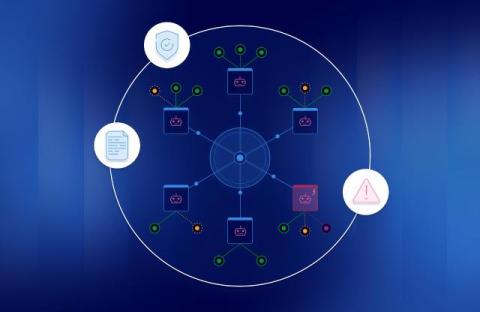
‍In this session, we take an in-depth look at what it truly means to treat APIs as critical infrastructure. Using industry data and real-world examples, we explore the gap between how much businesses rely on APIs and how well they are actually protected. And we talk about why that gap introduces operational and regulatory risks.

Secure Enterprise AI Apps and Agents: Visibility, Governance, Runtime Protection

When you deploy an AI application, do you know what's being sent into it — or what's coming back out? Cato AI Security provides runtime protection for the AI applications your organization builds and deploys, with real-time enforcement, sensitive data anonymization, and a complete audit trail across every interaction. Learn more or request a demo at catonetworks.com.

Modern Application Delivery Requires Unified Management & Flexible Licensing

Modern Application Delivery Requires Unified Management & Flexible Licensing Jamison Utter and Priyanka Mullan, Senior Product Marketing Manager at A10 Networks, discuss the fundamental infrastructure that powers today's modern applications. While technologies like AI and APIs often steal the spotlight, the true backbone of high-performing digital services lies in robust Application Delivery Controllers (ADCs).

Rethinking Application Delivery for the AI Era

Rethinking Application Delivery for the AI Era Is your network strategy keeping up with the AI era? Jamison Utter, Field CISO at A10 Networks, challenges IT leaders to move beyond "piecemeal" infrastructure and rethink their approach to application delivery. As organizations face the dual pressure of integrating AI workloads and managing a vast "fleet" of hybrid devices, the old ways of operating are becoming a liability. Jamison discusses the true cost of administrative overhead and the urgent need for a more flexible, simple, and future-proof vendor strategy.

From Intent to Outcome: How Agentic Coding is Transforming the SOC

See how Torq harnesses AI in your SOC to detect, prioritize, and respond to threats faster. Request a Demo Security teams are being asked to move faster and handle more complexity, while the threats they defend against are increasingly AI-assisted. When I wrote about VoidLink in January, my point was simple: you cannot fight machine-speed threats with human-speed defense. Attackers are using AI to code, adapt, and scale attacks while humans are still grinding away doing the heavy lifting in the SOC.

Shipping-Themed Phishing Scams Target the Middle East and Africa

A surge in shipping-related phishing scams is targeting the Middle East and Africa (MEA) region, according to researchers at Group-IB. “To deliver the scam, the attacker sends a phishing link to victims via SMS using various spoofing or bulk-message techniques,” the researchers write. “These links are typically optimized for mobile devices, since most victims open SMS messages on their phones.

Cato CTRL Threat Research: Vishing and Microsoft Teams Used to Deliver PhantomBackdoor

Cato CTRL has discovered a q-based delivery technique used against an Italy-based consumer services company associated with PhantomBackdoor, a multi-stage WebSocket-based backdoor previously reported in a Ukraine-focused spear phishing operation by SentinelOne. In SentinelOne’s earlier reporting, initial access relied on phishing lures and a ClickFix-style flow that triggered a staged PowerShell and ended with a WebSocket backdoor.

AI Security Best Practices: The Complete Guide

Artificial intelligence has moved from pilot project to core enterprise infrastructure faster than most security programs can adapt. AI is automating workflows, surfacing insights from complex datasets, and changing how work gets done across every function. But with that acceleration comes a new and expanding attack surface that most organizations are only beginning to understand.