
Security | Threat Detection | Cyberattacks | DevSecOps | Compliance

How Fidelis Deception Strengthens Network Detection and Response

Network Detection and Response systems excel at monitoring network traffic and identifying patterns, but they face inherent challenges with sophisticated threats that mimic legitimate behavior. Fidelis Deception addresses these NDR limitations by creating definitive detection points that eliminate ambiguity in threat identification.

Secrets Scanning: A Critical Practice for Protecting Sensitive Data in Code

With the rise of CI/CD pipelines, cloud-native development, and globally distributed teams, sensitive credentials like API keys, tokens, and database passwords often slip into source code. Sometimes accidentally, sometimes under pressure to deploy fast. This is not a rare mishap. A recent study found that 34% of API security incidents involve sensitive data exposure. And according to Cyble, over 1.5 million.env files containing secrets have been discovered in publicly accessible environments.

The MemcycoFM Show: Episode 5 - DNS Cache Poisoning Prevention: How to Protect Accounts in Real-Time

For security teams, it’s no great revelation to say that DNS cache poisoning prevention is essential for guarding against attacks using that vector. But it’s easier said than done. While traditional network-layer defenses like DNSSEC reduce poisoning risk, they can’t fully prevent it. Downstream – after redirection – bad actors await, ready to harvest credentials, bypass MFA, and take over accounts.

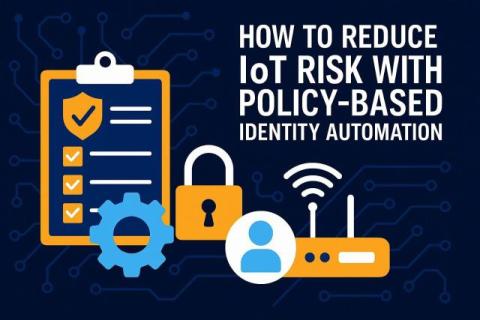
How to Reduce IoT Risk with Policy-Based Identity Automation

Policy-based identity management transforms security administration from individual device and user management to comprehensive policy frameworks that automatically govern identity lifecycle, access controls, and security enforcement across entire IoT ecosystems. The key elements of policy-based identity management include defining user roles, managing user access, implementing identity governance, and leveraging role based access control to ensure appropriate access and compliance.

API Security Is a Business Problem-Not Just an IT One

APIs are more than technical components—they're business-critical assets. In this powerful moment, Jeremy Dodson lays out why frameworks aren't enough and why companies must treat API security as a core business priority. Security leaders: it’s time to shift your mindset and protect real data flows, not just check boxes.

The 'no nonsense' list of security acronyms

You're probably here because you’re inundated (and fed-up!) with the number of acronyms around security tools, platforms, and processes. Every software provider wants to differentiate themselves in a crowded space with new capabilities, leaving developers and security pros exhausted.‍ So here’s our no nonsense list of security acronyms to help you figure out what’s what.

Data Governance: A Comprehensive Guide to Implementation

Implementing effective data governance in an organization requires a strategic approach that encompasses several key components. The first step is to establish a clear vision and objectives for data governance. This involves defining what data governance means for your organization and identifying the specific goals you aim to achieve. These goals could include improving data quality, ensuring data security, or enhancing data accessibility.

Modernising the Grant Process: Time-Saving Tools for a Stress-Free Experience

If you've ever worked on a grant program, you know what I'm talking about. The stacks of documents, the maze of spreadsheets, the endless email tag, and the specter of a compliance audit hanging over your head. For decades, this administrative drudgery has been tolerated as an evil necessary for securing funding. But what if it doesn't have to be this way? The inefficiency and stress of old-school grant management are not only frustrating; they actually take resources away from your organisation's central cause.

Choosing the Best Board Portal for Your Nonprofit Mission

Decentralized teams and mounting compliance requirements make nonprofit boards search for better alternatives to traditional document sharing via Google Drive and Gmail. Picking a board portal can reduce the inefficiencies in the boardroom and help members focus on mission-critical tasks instead of administrative burdens. This guide provides a checklist of the best board portal features for nonprofits, along with selection and implementation tips.

Why the M&A Data Room Is Your Silent Negotiator in Every Deal

Negotiations happen not only at the table of boardrooms or during late-night conference calls in this high-stakes jockeying for position of mergers and acquisitions. Some of the most far-reaching "conversations" occur backstage - between documents, data, and decision-makers. In this field, the M&A data room becomes a strong, mute negotiator that can either make or break a deal.