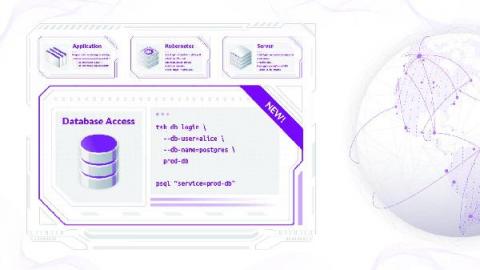
Teleport 6.0 Brings Identity-Aware Access to Databases Behind NAT
If you have PostgreSQL or MySQL databases running behind NAT in multiple environments, this release of Teleport is worth downloading and playing with.


If you have PostgreSQL or MySQL databases running behind NAT in multiple environments, this release of Teleport is worth downloading and playing with.
Cross-Site Request Forgery (CSRF) attacks allow an attacker to forge and submit requests as a logged-in user to a web application. CSRF exploits the fact that HTML elements send ambient credentials (like cookies) with requests, even cross-origin. Like XSS, to launch a CSRF attack the attacker has to convince the victim to either click on or navigate to a link.
Amazon’s AWS Systems Manager, better known as SSM to long-time AWS users, was announced at the end of 2017, replacing the similarly named EC2 Systems Manager that had launched a year prior. Similar to other AWS products, System Manager provides a broad spectrum of features instead of a focused and opinionated product.
0:00 Introduction
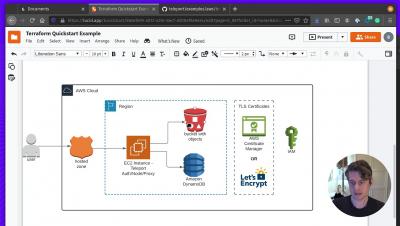
0:26 Deployment Overview
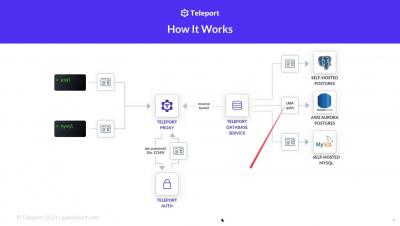
1:31 Why use Teleport?
2:05 tsh setup
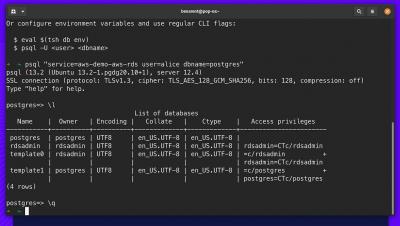
3:37 psql demo
4:25 Teleport Audit log
5:21 fleund Overview
6:01 Kibana Demo
6:35 Learn more at https://goteleport.com/database-access/
#postgres #mysql #teleport
Every cloud has its own identity and access management system. AWS and Google use a bunch of JSON files specifying various rules. Open source projects like Kubernetes support three concurrent access control models - attribute-based, role-based and a webhook access control, all expressed using YAML. Some teams are going as far as inventing their own programming language to solve this evergreen problem.
Cross-site scripting (XSS) is an attack that allows JavaScript from one site to run on another. XSS is interesting not due to the technical difficulty of the attack but rather because it exploits some of the core security mechanisms of web browsers and because of its sheer pervasiveness. Understanding XSS and its mitigations provides substantial insight into how the web works and how sites are safely (and unsafely) isolated from each other.
SSH certificates, when deployed properly, improve security. A half-baked access system using certs is more vulnerable than a public-key-based one if a user or host gets hacked.