Security | Threat Detection | Cyberattacks | DevSecOps | Compliance

Running IT at a Hyper Growth Startup

At Teleport we do IT a little differently — supporting a global remote company in hypergrowth is no easy feat and the playbook is different from traditional IT work. In this article, we want to share some of our IT philosophies that enable our employees to keep their agility despite working very asynchronously around the world.

When should a startup call the FBI

For this 11th episode of Access Control Podcast, a podcast providing practical security advice for startups, Developer Relations Engineer at Teleport Ben Arent chats with Elvis Chan. Elvis is Assistant Special Agent in charge assigned to the San Francisco FBI Field office. Chan manages a squad responsible for investigating national security cyber matters and has over 14 years of experience in the bureau.

Applying Least Privilege in Kubernetes II Jonathan Canada

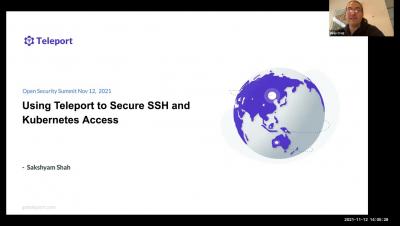
Scalability and Cloud-Native have driven the demand for Kubernetes, but the developer now has the harder task of building applications in a secure manner. This talk will focus on best practices for implementing least privilege and enforcing zero trust principles within Kubernetes clusters. A how-to for implementing robust Role Based Access Control (RBAC) tied into the corporate SSO/Identity provider using Teleport.

Low Latency Identity-aware Access Proxy in Multiple Regions

A multi-protocol access proxy is a powerful concept for securing access to infrastructure. But accessing numerous computing resources distributed across the globe via a single endpoint presents a latency challenge. Today we are announcing that the hosted edition of Teleport Access Plane is now available in 5 regions all over the world.

So You Want to Become a Sales Engineer?

Those of us that work with technology get this question a lot: “What do you do?” “I work in technology — more specifically, I work as a pre-sales engineer.” Sound familiar? Working in IT can mean a lot of different things, and to those outside of this world, it quickly becomes deeply technical and complicated to explain to non-IT people. Even explaining what you do to IT people can become complicated.

Do We Still Need a Bastion?

There is a growing discussion among network engineers, DevOps teams, and security professionals about the security benefits of bastions. Many assume that they are the “old way” of network access and have little relevance in the modern cloud native stack. These speculations are not irrelevant as in recent years, the corporate IT network perimeter as we knew it is diminishing, and the concept has been shifted to data, identity, and compute perimeter.