Security | Threat Detection | Cyberattacks | DevSecOps | Compliance

Why AI Red Teaming Belongs at the Core of Your AI Security Program

Enterprises are putting AI applications and agents to work on sensitive data and business workflows, while attackers look for new ways to manipulate the models and exploit the tools connected to them. Security leaders need to know whether those systems will hold up against a real attack, and AI red teaming gives them that answer by testing AI the way an attacker would.
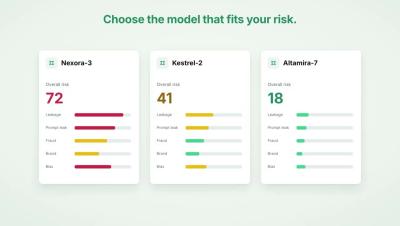

Cato AI Red Teaming: Find AI Model Risks Before Attackers Do

AI-powered applications depend on the models behind them, and those models keep changing. New attack techniques appear every day, model updates can change how safeguards behave, and switching models can leave existing protections behind. Security teams need to know where their AI is exposed before an attacker finds out first.

Penetration Testing vs Red Teaming: Choosing the Right Approach

When you're assessing a building's level of security, you're not just looking at one thing. It's great knowing that the front door has a series of unpickable locks bolted onto it, all of which have only one key in existence, but it's not really going to do anything if you're missing an entire external wall, essentially turning your living room into an open deck.

How to Evaluate an Automated Red-Teaming Vendor: A Technical Buyer's Guide

Every automated red-teaming vendor finds the planted flaw in its own demo app. That tells you very little about how the tool will behave on your APIs, with your login flows, your token lifetimes and your developers. The programs we see struggle usually stall on the work around detection: writing auth scripts, keeping tokens alive, arguing over whether a finding is real, and re-testing fixes by hand. That work lands on a small number of senior security engineers.

Red Teaming Agentic AI: Why Testing the Model Is No Longer Enough

In January 2025, NIST's Center for AI Standards and Innovation published red team results that should have changed how enterprises test autonomous systems. Against an AI agent operating in simulated workspace, travel, Slack and banking environments, the strongest previously known hijacking attack succeeded 11% of the time. The strongest new attack developed by the red team succeeded 81% of the time. The model had not changed. The evaluation had.

Continuous Automated Red Teaming (CART): Benefits, Challenges, and Best Practices

Ever wonder why security programs in most organizations fall short despite purchasing defensive cybersecurity tools, conducting offensive security scans, and meeting compliance? Simply put, their attack surface changes faster than validation does, i.e., teams add new assets, deploy code constantly, expand access, and let configurations drift. Say you installed fire alarms and ran a safety drill. Months later, you remodel, but you’re still using the old safety checklist. How safe does that sound now?

Autonomous Pentesting vs. Red Teaming: Do You Still Need Both?

Security teams are spending more money than ever on offensive security, and getting less clarity than ever on what it buys using them. For a long time, the central debate was pentesting vs red teaming. That argument settled itself once buyers understood that the two serve different objectives. Now it’s slipping again due to autonomous pentesting vs red teaming.

Best AI Red Teaming Tools: Top 7 in 2026

There was a time when “AI red teaming” sounded like a novelty. Now, it’s fast becoming table stakes. If your organization is shipping machine learning or LLM-powered systems into the real world (especially in sensitive domains), you need to know how those systems behave under pressure. That’s where AI red teaming tools come in. These tools help teams stress-test AI the way it will actually be used (and misused).

Day in the Life of a Red Teamer: Thinking Like the Adversary

There’s a persistent myth about red team operators: that the job is all zero-days, glowing terminals, and cinematic “I’m in” moments. The reality is more interesting and far more human. A day in the life of a red teamer is less about chasing flashy exploits and more about understanding how real people, real systems, and real environments fail under pressure.