Security | Threat Detection | Cyberattacks | DevSecOps | Compliance

How to secure your cloud credentials against AndroxGh0st

On January 16, the U.S. Cybersecurity and Infrastructure Security Agency (CISA) and the Federal Bureau of Investigation (FBI) sent out a Cybersecurity Advisory (CSA) about active threat actors deploying the AndroxGh0st malware. This is significant as cyber criminals are actively using this malware to target Laravel (CVE-2018-15133) (an open source PHP framework).env files and obtain credentials for various high profile applications like Office365, SendGrid, and Twilio.

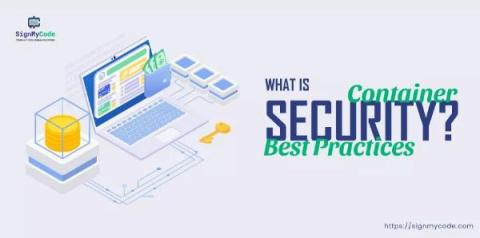
What Is Container Security? Container Security Best Practices, Challenges and Tools

Nowadays, most of the applications are deployed on containers and orchestrated using Kubernetes or similar technology. Due to this, the performance, stability, and scalability are highly increased. But, it also widens up the attack surface if proper security controls, techniques, tools, and practices are not followed/used. So, if your application is running on containers or if you are thinking about deploying containers, then learning about container security best practices is a must.

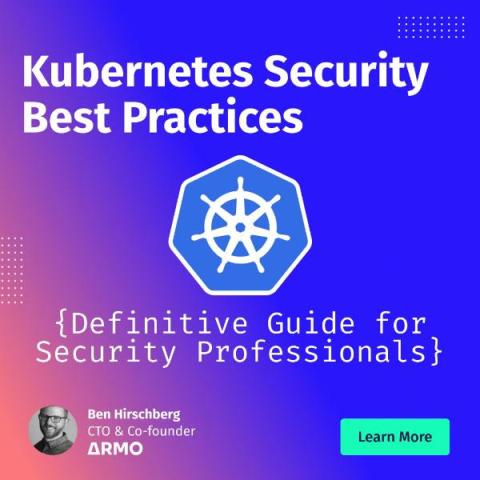
Kubernetes Security Best Practices for Security Professionals

As containerized applications become the norm, the complexities of securing these dynamic, scalable environments demand a fresh perspective on traditional security practices. While Kubernetes streamlines deployment and management, it also introduces a new layer of attack surface, necessitating a nuanced approach to threat mitigation.

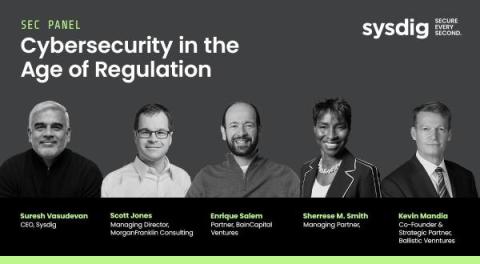
Cybersecurity in the Age of Regulation

Cybersecurity breaches are becoming more frequent and more impactful. Adversaries continue to grow stronger, and defenders aren’t always keeping pace. Add in the increasing number of nation-state actors in the threat landscape, and it’s hardly surprising that governments are starting to take a greater role in regulating security. On July 26th, 2023, the U.S.

Cybersecurity in the Age of Regulation - Sysdig

Cybersecurity breaches are becoming more frequent and more impactful. Adversaries continue to grow stronger, and defenders aren’t always keeping pace. On July 26th, 2023, the U.S. Securities and Exchange Commission issued new regulations on cybersecurity risk management, strategy, governance, and incident disclosure, leaving many companies concerned about how to ensure compliance with these new rules, and what changes they may need to make to get up to speed.

Kernel Introspection from Linux to Windows

The cybersecurity landscape is undergoing a significant shift, moving from security tools monitoring applications running within userspace to advanced, real-time approaches that monitor system activity directly and safely within the kernel by using eBPF. This evolution in kernel introspection is particularly evident in the adoption of projects like Falco, Tetragon, and Tracee in Linux environments.

Leveraging Recommended Metrics for Calico to optimize and secure Kubernetes application operations

In the ever-evolving landscape of Kubernetes networking and security, Calico has proven to be a battle-hardened, scalable and robust solution. Core to Calico’s architecture are two components, Felix and Typha. And given their importance for running Kubernetes deployment, it is no surprise that monitoring these components is crucial to secure and maintain them for optimal cluster operation.

Detecting 'Leaky Vessels' Exploitation in Docker and Kubernetes

On January 31st 2024, Snyk announced the discovery of four vulnerabilities in Kubernetes and Docker. For Kubernetes, the vulnerabilities are specific to the runc CRI. Successful exploitation allows an attacker to escape the container and gain access to the host operating system. To exploit these vulnerabilities, an attacker will need to control the Dockerfile when the containers are built.

Sysdig Identifies a Cloud-Native Security Crossroads: Best Practices vs. Convenience and Speed

Sysdig’s seventh annual Cloud-Native Security and Usage Report identifies how customers are developing, using, and securing cloud-native applications and environments. We analyze data from millions of containers and thousands of accounts and publish the most pertinent information for you. Security practitioners and leaders look forward to this report to identify trends and make adjustments to their cloud security strategy.

Buildkit build-time container teardown arbitrary delete (CVE-2024-23652)

Snyk has discovered a vulnerability in all versions of Docker Buildkit <=v0.12.4, as used by the Docker engine. Exploitation of this issue can result in arbitrary file and directory deletion in the underlying host OS when building an image using a malicious Dockerfile or upstream image (i.e, when using FROM). This issue has been assigned CVE-2024-23652.