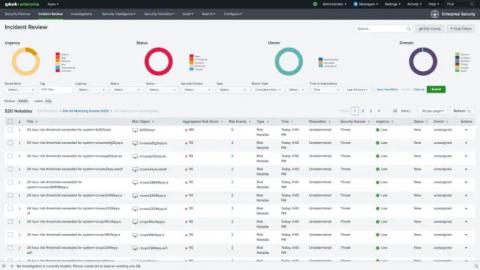
We are super excited to announce updates to Splunk Enterprise Security (ES) with our latest 6.6 release. Get ready for the latest and greatest that Splunk Enterprise Security has to offer. Let's dive right into it.
I might assume that you found this blog while conducting research on how to protect your business from skimming breaches. Let me guess… you just survived a Magecart-type, cross-site scripting (XSS), formjacking, skimming, or other client-side attacks? Now your CISO, CEO, or board are asking you to figure out how to ensure this doesn’t happen again?
Coming into force on May 25th, 2018, the General Data Protection Regulation (GDPR) was a landmark for data protection. Trading blocs, governments, and privacy organizations took note, and over the last three years, GDPR has inspired new data privacy legislation worldwide.
Many compliance standards focus on protecting individual personal information and sensitive data in a world rife with cyber-attacks and data breaches. Now, companies need to make their systems immune to digital intrusion and prepared to reduce the attack surface for strong information security measures around private information. Data breaches are becoming a norm through the more and more rapid transition of physical businesses to online businesses and more online activities.
Most organizations have more threat intelligence than they know what to do with, from a variety of sources – commercial, open source, government, industry sharing groups and security vendors. Bombarded by millions of threat data points every day, it can seem impossible to appreciate or realize the full value of third-party data.
IndigoZebra is a Chinese state-sponsored actor mentioned for the first time by Kaspersky in its APT Trends report Q2 2017, targeting, at the time of its discovery, former Soviet Republics with multiple malware strains including Meterpreter, Poison Ivy, xDown, and a previously unknown backdoor called “xCaon.” Now, security researchers from Check Point have discovered a new campaign by Indigo Zebra, targeting the Afghan National Security Council via a new version of the xCaon backdoor, dubbed
Protecting the data of an organization is a complex task. Data is the crown jewel of any organization which the adversaries continuously seek to get their hands on. Data is threatened both by external attackers and internal threats. Sometimes the threats are malicious, and in many cases, they are accidental. Both these cases have to be addressed by modern enterprise security departments.