Azure Security Best Practices: A Comprehensive Guide
Mobile applications have a large share of digital assets, due to their frequent presence in everyday life. As we progress towards a digital age, cybersecurity is an ever-growing concern.


Mobile applications have a large share of digital assets, due to their frequent presence in everyday life. As we progress towards a digital age, cybersecurity is an ever-growing concern.
Database security often, and to an organization's detriment, falls between the cracks as security and IT teams scramble to stay on top of daily cyber hygiene tasks and deal with the never-ending problems of running their network. The danger of overlooking their database, or to put it in, say, banking terms – the vault – is this is likely a threat actor's primary target. An organization's database is where IP, credentials, and financial information are stored.
83% of organizations find cloud security to be a concern in the case of cloud computing. This overwhelming concern stems from the large-scale interactions offered by the cloud which can result in security risks, data leaks, and compliance issues.
Common Venmo scams include phishing scams, offers of fake prizes and cash rewards, fake payments and more. The more aware you are of common Venmo scams, the better you can avoid falling for them and losing money. Continue reading to learn some of Venmo’s most common scams, what to do if you’re scammed on Venmo and how to stay safe when using Venmo.
We are excited to announce that KnowBe4 has been named a leader in the Fall 2023 G2 Grid Report for Security Orchestration, Automation, and Response (SOAR) for the PhishER platform for the tenth consecutive quarter! The latest G2 Grid Report compares Security Orchestration, Automation, and Response (SOAR) Software vendors based on user reviews, customer satisfaction, popularity and market presence. Based on 228 G2 customer reviews, KnowBe4’s PhishER platform is the top ranked SOAR software.
Interconnected, data-enabled devices are more common now than ever before. By 2027, it is predicted that there will be more than 41 billion new IoT devices. The emergence of each new device offers a fresh vulnerability point for opportunistic bad actors. In 2022, there were over 112 million cyberattacks carried out on IoT devices worldwide. Without sufficient protection, attackers can exploit these weak points to gain access to sensitive data or restrict access to internet networks.
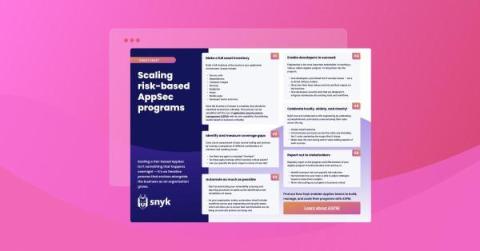
Scaling a risk-based AppSec program involves adapting your security practices to accommodate the growth and evolving needs of your business, while effectively managing and mitigating security risks.
With the United Nations Economic Commission for Europe World Forum for Harmonisation of Vehicle Regulations (UNECE WP.29) framework coming into effect in July 2024, leaders across the Automotive sector are apparently ‘swamped’ by the volume of compliance and security risks that need to be addressed to protect drivers in all types of connected or autonomous vehicles.