A dedicated channel partnership brings frontier AI to the channel and service providers through Sophos Fusion, powering new security services partners can build on.
Harness engineering is the practice of building the layer, including code, that turns an AI model from a text generator into an agent that can take actions. In short, an AI agent is a model plus a harness. The model decides what to do next, and the harness makes it happen, connecting the model to tools, context, external systems, and validation. In a lot of practical work, and especially in security work, the harness decides the quality of the output more than the choice of model does.
On July 30th, 2026, SolarWinds released fixes for a critical Authentication-Bypass vulnerability in Web Help Desk (WHD) tracked as CVE-2026-28323, and a related high-severity Denial-of-Service vulnerability, tracked as CVE-2026-28299. Although no active exploitation has been observed yet, WHD is commonly internet-facing and the authentication bypass requires no credentials, making it a likely target once exploit code becomes available.
Most security programs answer to three frameworks at once and document themselves three times. A customer questionnaire asks for ISO 27001 evidence, a cyber insurer asks for NIST CSF alignment, an assessor references CIS safeguards, and the same firewall rule gets described in three vocabularies for three audiences. The duplication is self-inflicted rather than required, and a holistic approach to cybersecurity GRC starts by recognizing that one program is being described repeatedly.
On a Tuesday morning in Q3, a procurement agent at a mid-market manufacturer approved a $340,000 payment to a vendor account. The vendor name matched the approved-vendor list. The invoice format matched the standard template. The agent verified both, cross-checked the amount against historical purchase orders, and released the payment through the treasury API within eleven minutes of the invoice arriving. No human touched the transaction.
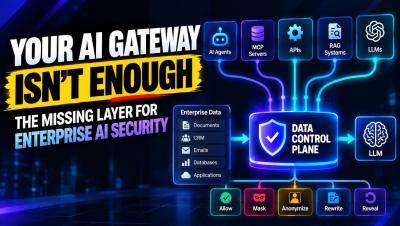
Agentic AI security solutions help teams discover, govern, monitor, and control AI agents, copilots, LLM apps, MCP servers, and autonomous workflows. For security and DevOps leaders, they matter because agents can act across production systems. This guide compares leading tools and explains how to choose the right fit. AI agents are moving from assistants to actors.
When people hear the word cybersecurity, they often picture analysts racing to stop an attack in real time. Those roles are absolutely critical, but a lot of effective security happens long before an alert ever appears. As Director of Operational Intelligence (OpsIntel) at LevelBlue, my job isn't to respond to every incident myself.
Arctic Wolf is tracking an ongoing Microsoft 365 phishing campaign affecting healthcare, education, manufacturing, government, professional services, and other sectors across the United States, Canada, and Europe. In July 2026, we observed hundreds of organizations being targeted by email, with successful intrusions identified across a broad range of environments.
A developer installs a skill to make their coding agent less chatty. It works. It also, the first time the agent uses it, reads the AWS credentials on that laptop and sends them to a domain no one recognizes. No one wrote obviously malicious code and no one approved a change. A file landed in a folder, the agent loaded it on the next run, and production credentials were gone.
Every enterprise is racing to adopt AI, and every security team is racing to keep up without becoming the department that says no. Most are still evaluating tooling built specifically for AI agents. But there's a faster, simpler starting point available today: the large majority of AI activity right now runs on behalf of a signed-in user, what we call “on-behalf-of” (OBO) access. Secure that identity well, and you've secured the AI acting through it.